
Why we care about kina
Words and photos by Benthics
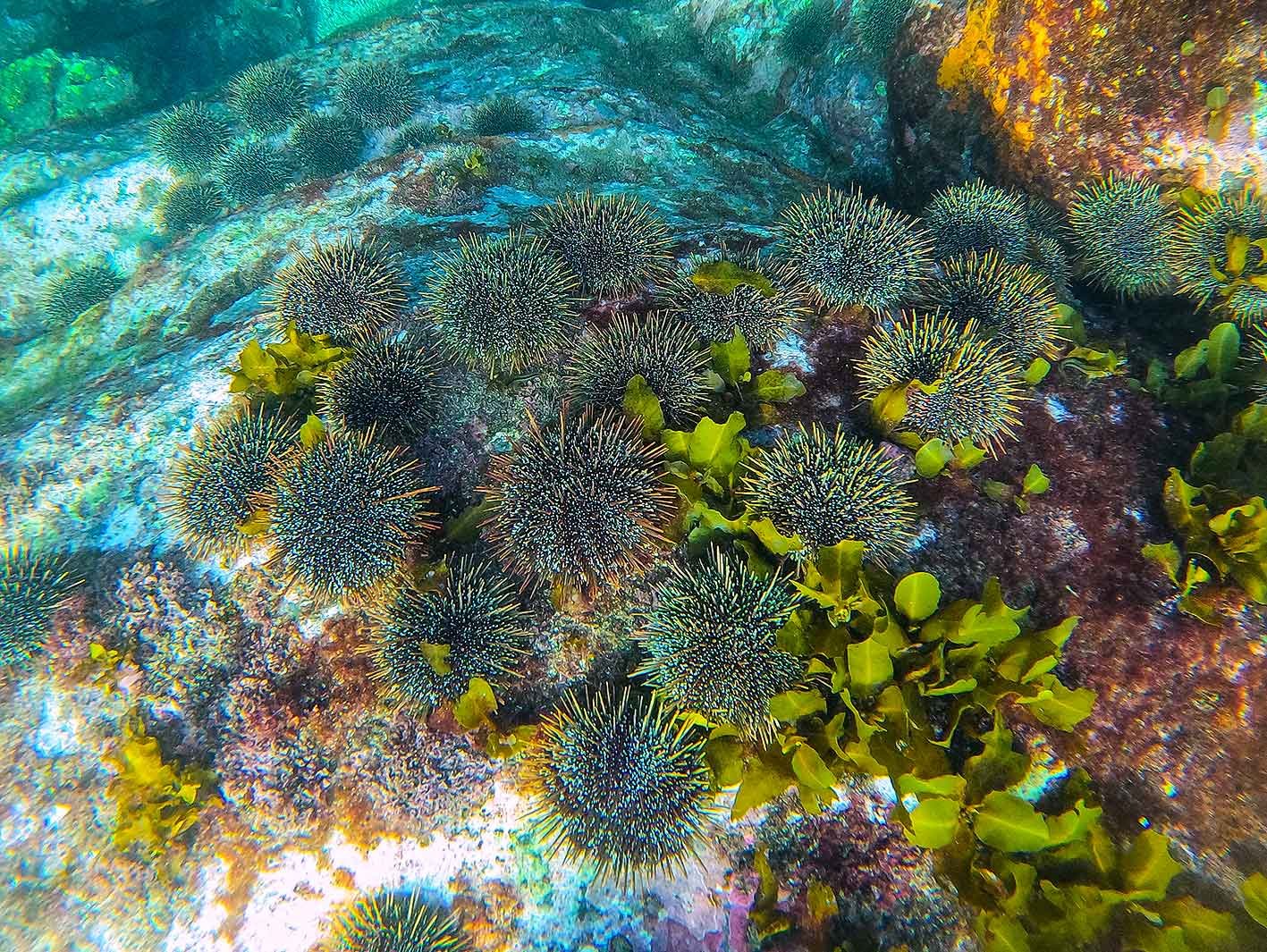
Kina resting on the reef at Te Kohuroa Matheson Bay.
Sea urchins are prickly, sometimes ‘hat-wearing’ marine invertebrates that can be found in a wide range of ocean habitats around the world.
Sea urchins live in the depths of the ocean, on shallow reefs, corals, and within rockpools. There are over 900 different species of sea urchin and they come in a diverse range of colours and shapes. While there is lots of variety between individual species, most sea urchins can be easily identified by their roundish body, tube feet (which they use for walking) and their protective spines. In Aotearoa, there are several species of sea urchin. The most common species, Evechinus chloroticus, is referred to by its Māori name, kina.
Kina are endemic to New Zealand, which means they are not found anywhere else in the world. They can grow to around 15 centimetres in width and live to approximately 20 years old. Kina are also a taonga (treasured) species within Aotearoa and are valued for their iron-rich roe (eggs), which are harvested through the summer months as a nutritious source of kaimoana (seafood).
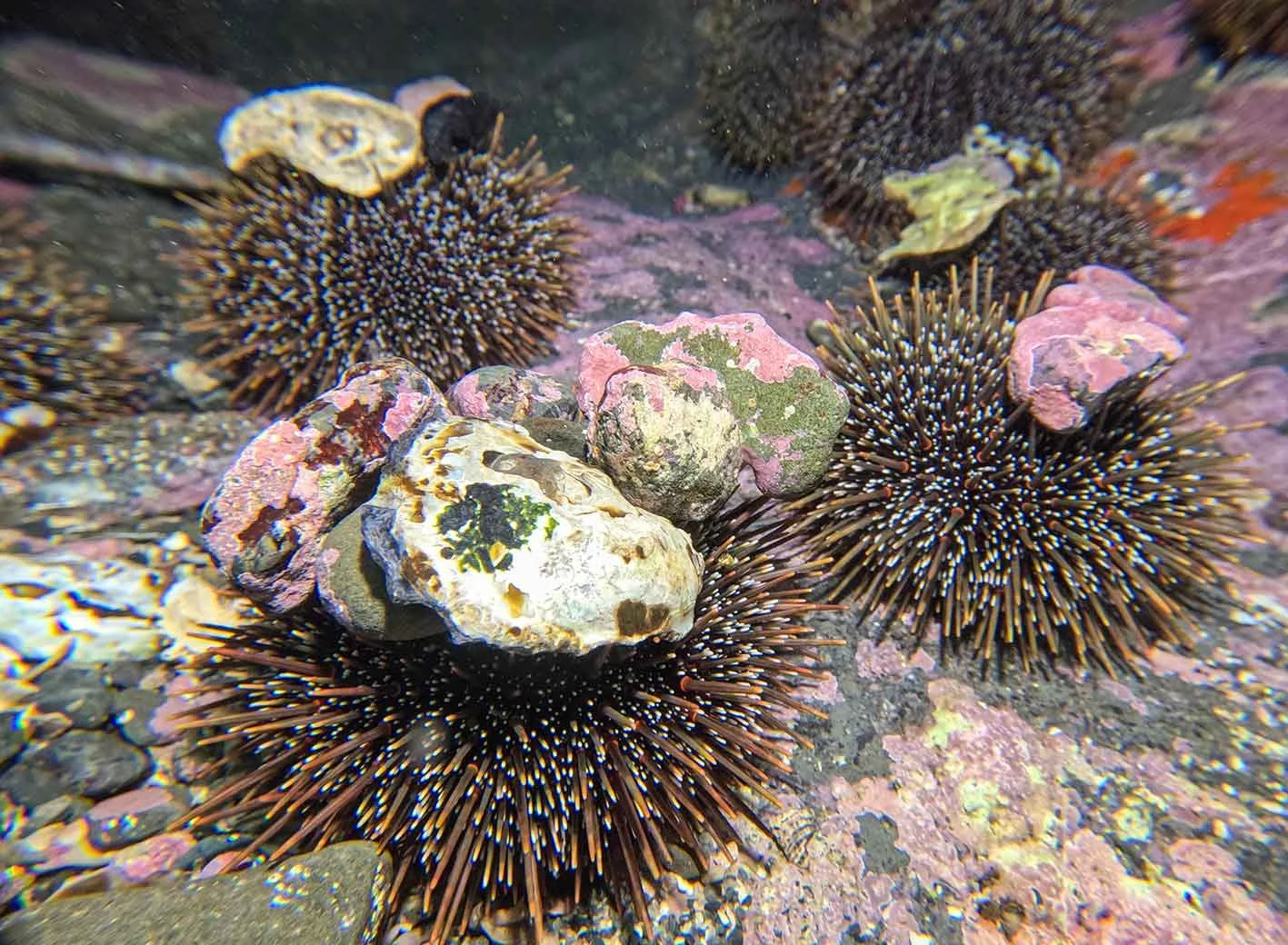
Kina often cover themselves with objects such as stones, shells and seaweed to protect from being eaten.
Trophic Cascades
Kina live in coastal ecosystems from the intertidal zone down to around 14 metres on submerged rocky reefs. They are mostly herbivores and alongside other urchins, they play an important ecological role by grazing away seaweeds to make way for new life on the reef. Kelp is the main food source for kina and when marine ecosystems are balanced, kelp and kina thrive together.
On the reef, kina are an essential part of the ocean’s food web (a complex, interconnected network of feeding relationships) and provide a food source for species such as tāmure (snapper) and kōura (lobsters). When these key predators are abundant, the balance of life at each stage of the food web remains stable. However, tāmure and kōura populations have significantly reduced in recent years due to the effects of overfishing, and kina numbers have grown exponentially because there are no longer enough predators to eat them. This has led to increased kina numbers, and in turn less kelp, creating what is commonly referred to as kina barrens. This ‘cause and effect’ reaction is known as a trophic cascade, and describes the collapse of the food web through many layers of the ecosystem. In areas where kina barrens exist, there is little to no seaweed or kelp coverage. The kina that live there do not have enough food and produce ‘skinny’ roe, and are often unwell.
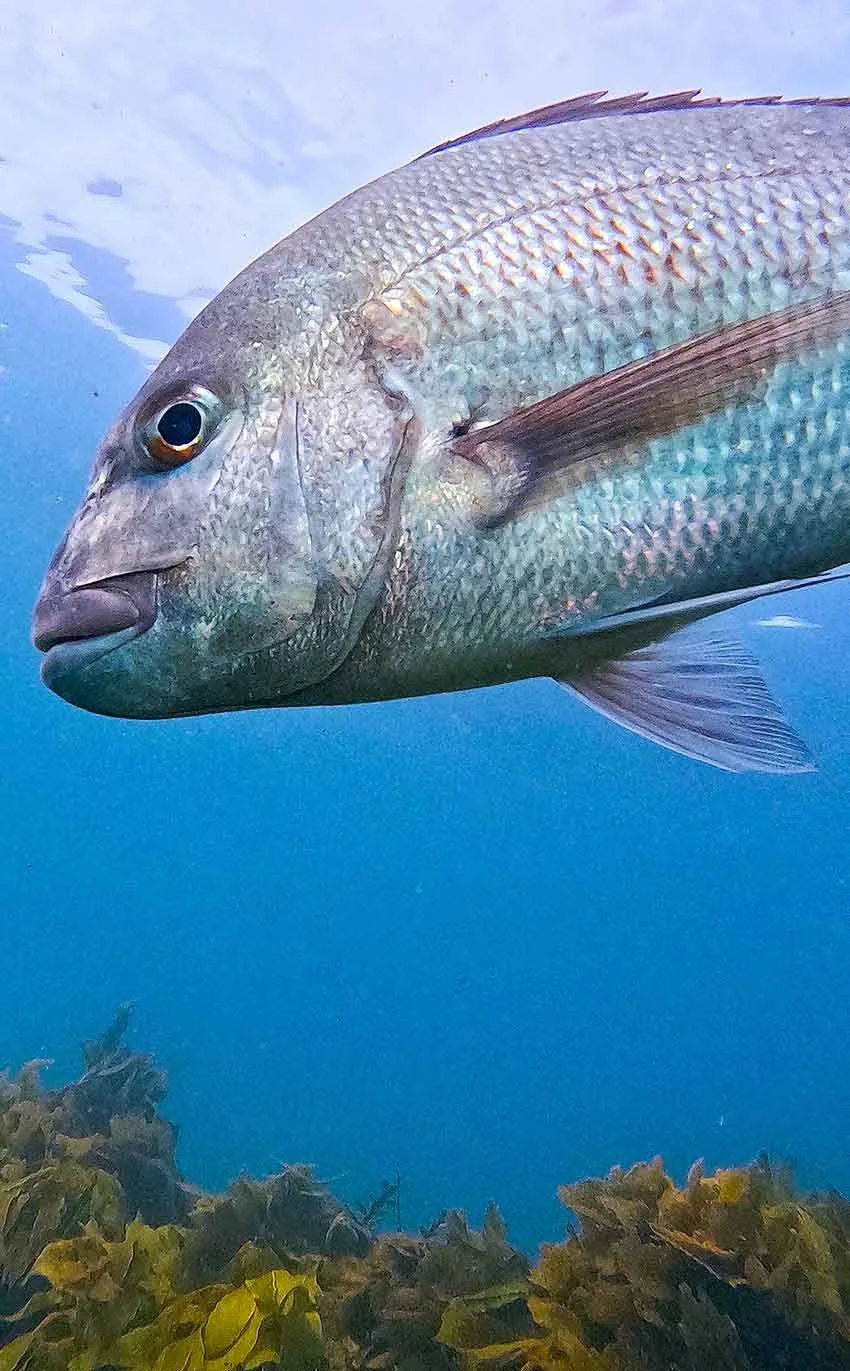
Kina numbers have grown exponentially because there are no longer enough predators to eat them. This has led to increased kina numbers, and in turn less kelp, creating what is commonly referred to as kina barrens.
Why kina aren’t really the problem
While the phenomena of urchin barrens is growing globally, urchins themselves are not the cause of the problem. The significant loss of key predators through commercial and recreational fishing or disease (such as the mass die-off of sea stars in California) means that the natural processes on the reef begin to fail and negative ecological shifts take place. As kelp forests reduce and ecosystem resilience declines, other stressors such as rising sea temperatures can tip the reef into a permanent state of diminished wellbeing.
Here in Aotearoa, kina barrens can be found around most of our coastlines, with high densities along the north east coastline of Aotearoa’s north island. They can also be seen at various sites at Te Kohuroa Matheson Bay. While fishing pressure is high within the bay (due to the boat ramp at Leigh harbour and easy shore access for kayakers and spearfishers), there are other issues that make it difficult for ecosystem recovery to occur. Land-based stressors such as fine silt and sedimentation (which washes downstream in heavy rainfall), nutrients and bacteria (from old septic tanks and farming run-off), and peak summer ocean temperatures put additional pressures on the environment. This exacerbates the health of areas with low biodiversity (eg, fewer predators) and with degraded habitat, making it difficult for habitat to recover.
Holistic help
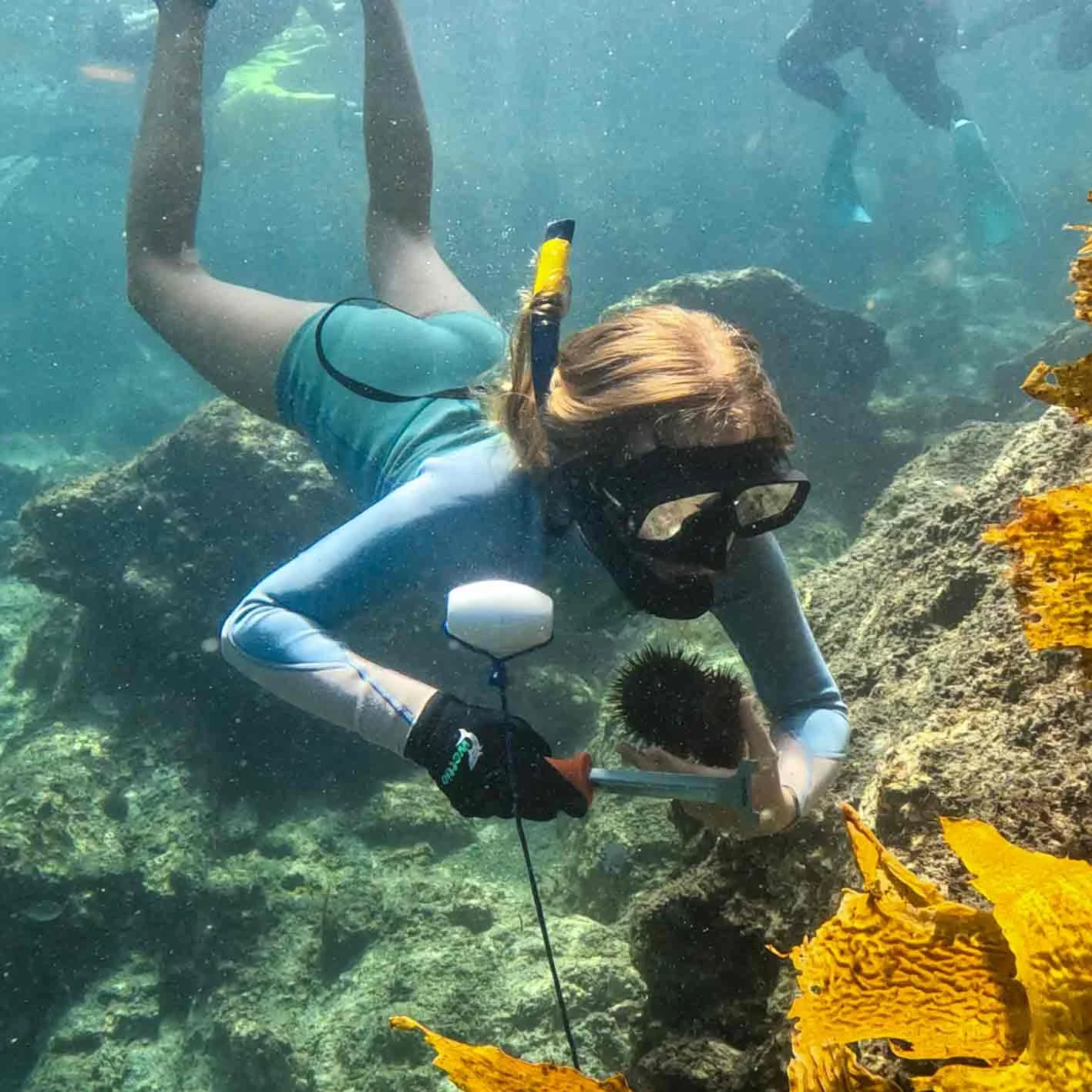
A rewilding volunteer harvests kina to support kelp regrowth
Finding solutions that support marine ecosystem recovery is complex. The constantly changing conditions within the ocean (plus additional human-made stressors) can either suppress or accelerate the ecological recovery of a coastline. Marine protection is an essential tool to support biodiversity, but it requires communities to sacrifice access to fishing and traditional ways of life to preserve nature in this way. Rewilding brings an active approach to ocean regeneration, and restoration practitioners often focus on strategies that ‘help the environment to help itself’. However in Aotearoa specifically, Māori have lived in connection with te taiao (the environment) for hundreds of years, responding proactively to changes in environmental health either seasonally or yearly, and adjusting their impact through the practice of kaitiakitanga (guardianship) with future generations in mind.
TKRI’s rewilding goal is to promote ocean guardianship, through a long-term program of active restoration, that enables communities to get involved in supporting better outcomes for the health of the ocean and local people. By getting involved in environmental volunteering, participants increase their connection to the ocean, feed the community, and work to restore balance and resilience to the marine ecosystem.
We want our community to know that kina are not the problem. And, that harvesting kina (and other population control measures) will never provide a long-term solution to the impacts of human activity on kelp forests and the residents of the rocky reefs.
Instead, we want to show communities how to work respectfully with kina and the vibrant diversity of life within the rocky reef ecosystem to build knowledge, skills and connections that empower everyday people to take positive action in their own blue backyard. And to build understanding about how communities can hinder or support healing for te taiao by actively taking part in its guardianship.
Learn more about how TKRI’s mahi is supporting kina wellbeing, by reading about the kelp restoration program here.
About the Author
Benthics is an underwater photographer, video and science communicator who produces conservation-focused content about the ocean. Her work is used by scientists, educators and conservation leaders to highlight the beauty, diversity and intrinsic value of life below the waves; emphasising both the environmental challenges and nature-based solutions that can be found within Aotearoa’s unique marine ecosystems. www.benthics.com