
Interview: Benn Hanns, The importance of lobsters
Interview by TKRI, photos by Benn Hanns and Nick Shears.
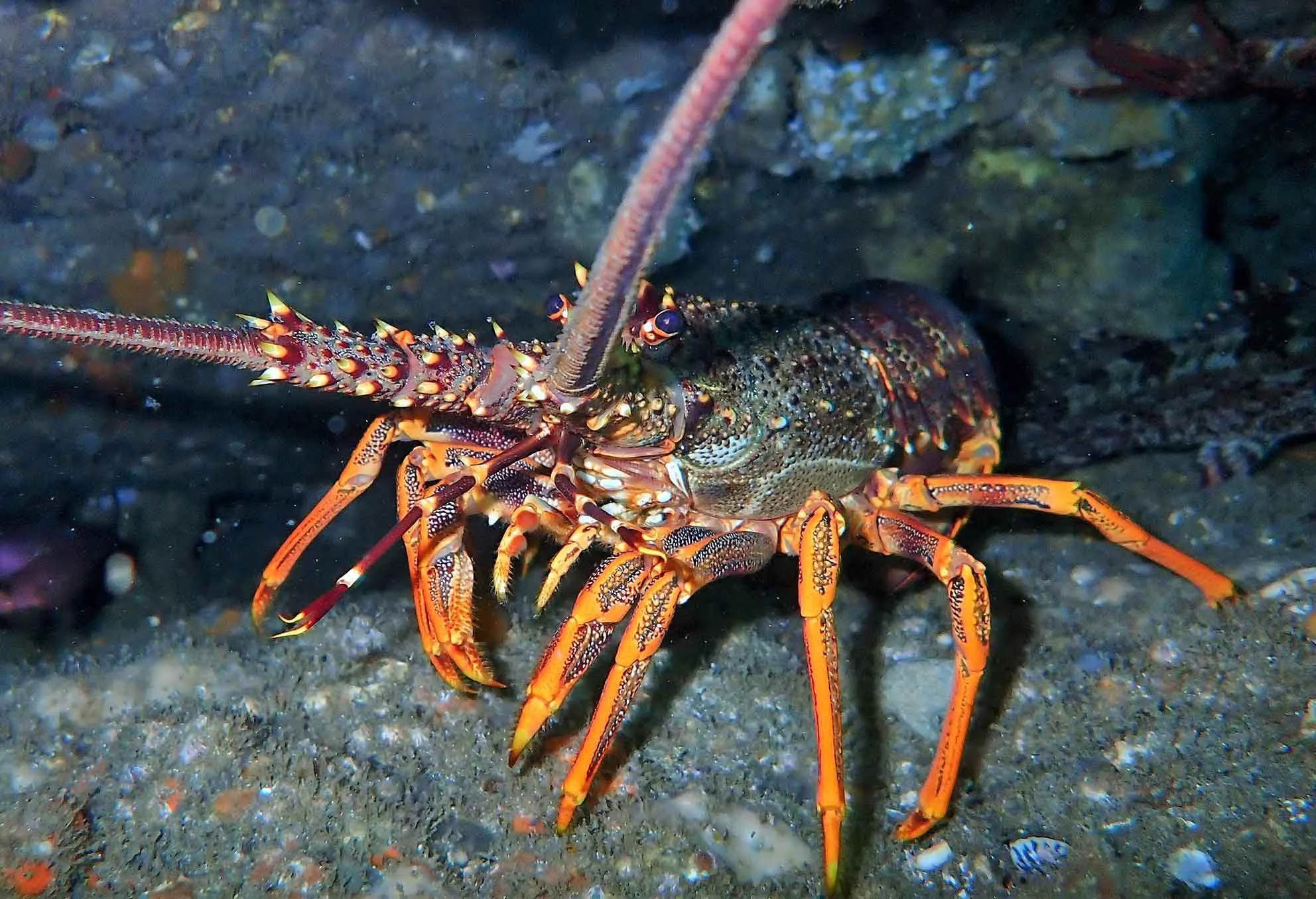
A Red rock lobster (Jasus edwardsii), also known as kōura or crayfish in Aotearoa.
Benn Hanns is a research fellow at the University of Auckland. His work provides insights into the importance of rock lobsters as a rocky reef predator, and whether marine protected areas are doing enough to help these species thrive.
Aotearoa has two common species of rock lobster. Red rock lobsters (kōura, crayfish, Jasus edwardsii) and packhorse lobsters (pawharu, Sagmariasus verreauxi). Both species play an important role to keep kina populations balanced on coastal rocky reefs, but have very different and complex lifecycles. In recent years, growing concern about the declining number of lobsters led Benn to ask a very important question: Are marine reserves really ‘the golden ticket for conservation’ and are they protecting lobster populations on a wider scale, or are they too small to be achieving what they should be? In this interview, Benn shares his research findings and thoughts on the state of lobsters with Aotearoa.
Q: Tell us about some of the differences between red and packhorse lobsters, and how their movements impact their presence on rocky reefs.
A:Kōura are unusual compared to a lot of other spiny lobsters, because they're incredibly resident. Once they get to a certain size, they will pick a permanent home that becomes ‘their’ rock. Research has shown that these lobsters will undertake long, multiple kilometre journeys offshore, but return to the same patch of reef year after year. Young males seem to explore further and go on ‘over-reef experiences’ and often wander out of marine reserves as teenagers. However, while there’s a component of the population that might move around, most red rock lobsters will happily stay on their patch of the reef.
Packhorse lobsters are a completely different kettle of fish, because they are incredibly transient. Past research suggests that the main spawning grounds of packhorse are in the far north, so we assume they undertake this northward migration through their lifecycle to breed. After they spawn, larvae travel down the East Auckland Current settling as far as East Cape. Then they start making their way north again. So they're always on the move.
Coinciding with warming ocean temperatures we’ve been seeing an ongoing decline in kōura (red rock lobster) but an increase in packhorse. So one of the questions we need to start asking is how is this change going to impact our rocky reef ecosystems in northeast New Zealand.
Q: Do we know if kōura and packhorse eat kina at the same rates, and whether a shift in species presence would positively or negatively impact the number of kina on the reef?
A: That's a key question, and we don't know. We know how many kina we can have in a square metre of reef for kelp to disappear or come back. But we don't know how many lobsters we need to manage kina populations, their rates of urchin predation or the different rates of predation between the different species.
Packhorse may still have an overall effect on urchin populations, but due to their transient nature it's likely it won't be as concentrated or localised as the resident populations of kōura.
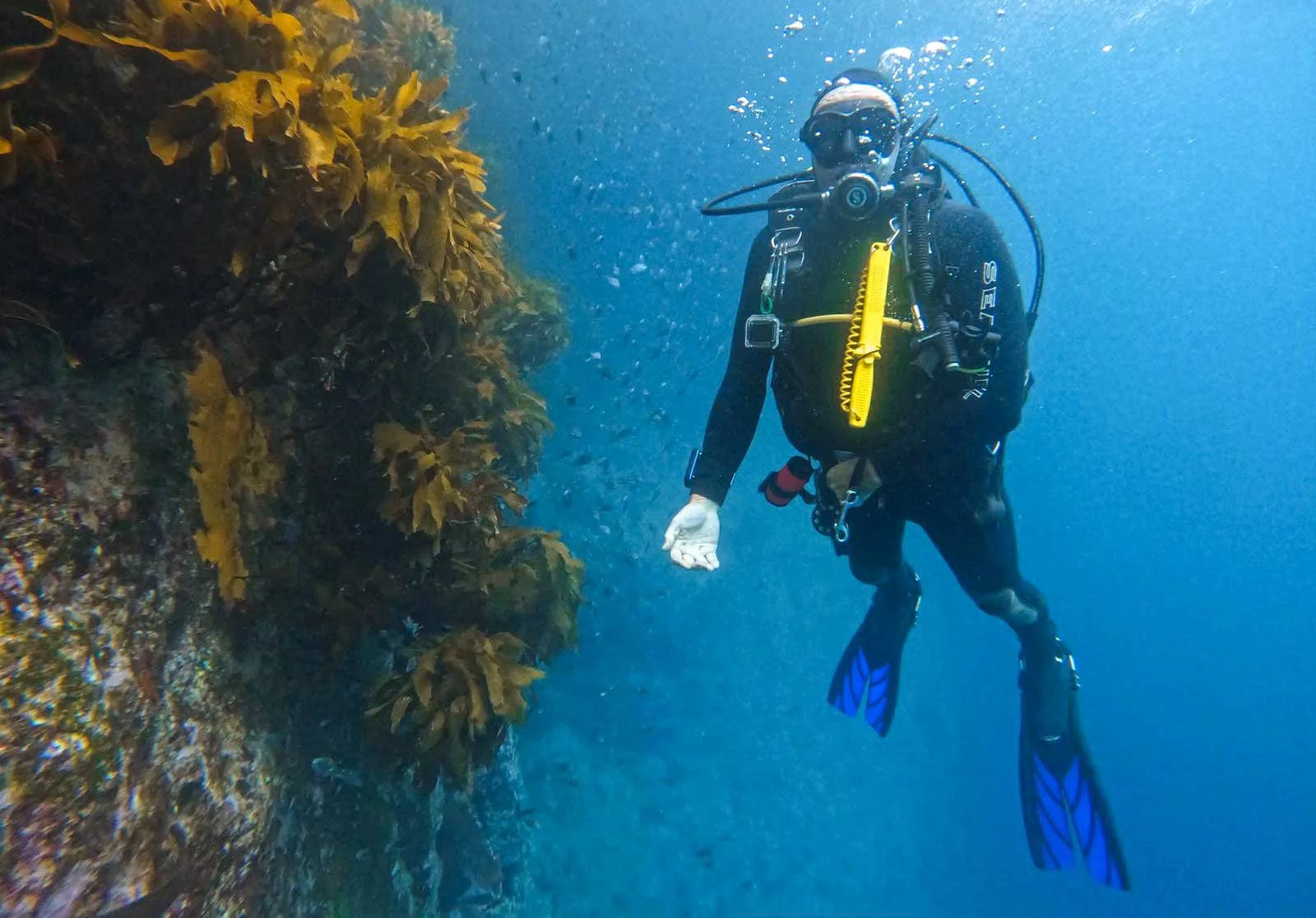
Surveying lobster populations is vital to understanding lifecycle within and outside of marine reserves. (Photo: Louise Wilson)
Pressures on lobster populations
Q: Why did you start assessing Lobster populations and where they live?
A: I started looking at lobster populations across different marine reserves during my PhD to understand how they're distributed and how the geometry of each reserve compares to the movement of the lobsters. We found evidence that kōura were once moving seasonally offshore and crossing the offshore [protection] boundaries of the Goat Island and Tāwharanui Marine Reserves, showing that these marine reserves may not have been big enough to effectively protect these populations. Around the same time, an assessment of the commercial kōura fishing stocks for northeast New Zealand found that the CRA2 fishery had dropped below the soft limit (a safety limit that indicates when a fished species is becoming depleted), which led to a 60% reduction in the total allowable commercial catch. That fact long-term trends in lobster densities within these reserves mirrored reductions in the surrounding fishery indicated these populations may still be vulnerable to fishing.
Q: How did these key findings shape your next steps?
A: My main question was how did we get here? I wanted to know if there was a problem with how we manage our fisheries and assess stock levels. It made sense to start looking at human impacts on non-protected marine areas relative to non-impacted protected areas. I wanted to shift the lens from focusing on recovery within these protected areas, to using these areas as an experimental control or reference to assess change in surrounding non-protected fished areas against.
To begin to understand and assess lobster populations effectively, Benn started asking questions around the accuracy of the estimates being provided by Fisheries NZ, and whether their stock assessments were accurate. Benn and his colleagues have gone from sitting on the outside of these management conversations, to now being involved in them and influencing outcome.
A: Ultimately it all comes back down to the health of the rocky reef, because lobsters are an incredibly important rocky reef predator, but their populations are at a point now where they can't effectively control kina populations and the expansion of kina barrens.
Q: What has your research highlighted about the movements of lobster populations from within reserves, and their ability to repopulate non protected reefs?
A: It has suggested that the long-distance seasonal offshore movements kōura were previously undertaking may no longer be occurring to the same extent, due to reduced population densities, and the potential inability to form defence aggregations of multiple individuals. Now only the largest and most bold (e.g., large males) in the population may be brave enough to leave the sanctuary of the rocky reef by themselves. While this may mean fewer kōura are now crossing the reserve’s offshore boundary, it doesn't mean we shouldn’t be precautionary about protecting future populations by extending the reserve boundary further offshore. In the event that we have a really good recruitment event (a large increase in baby lobster), densities in the reserve could rebuild and re-establish these offshore movements. We also don't know the importance of those offshore movements in terms of the ecology of the rocky reef and beneficial impacts on soft sediment environments. So, in the event that the densities do recover and those offshore movements do start to come back, we need to have reserves that are big enough to protect lobsters while they’re moving offshore. It’s awesome the Goat Island and Te Whanganui-o-Hei marine reserves have been extended to protect these moving kōura.
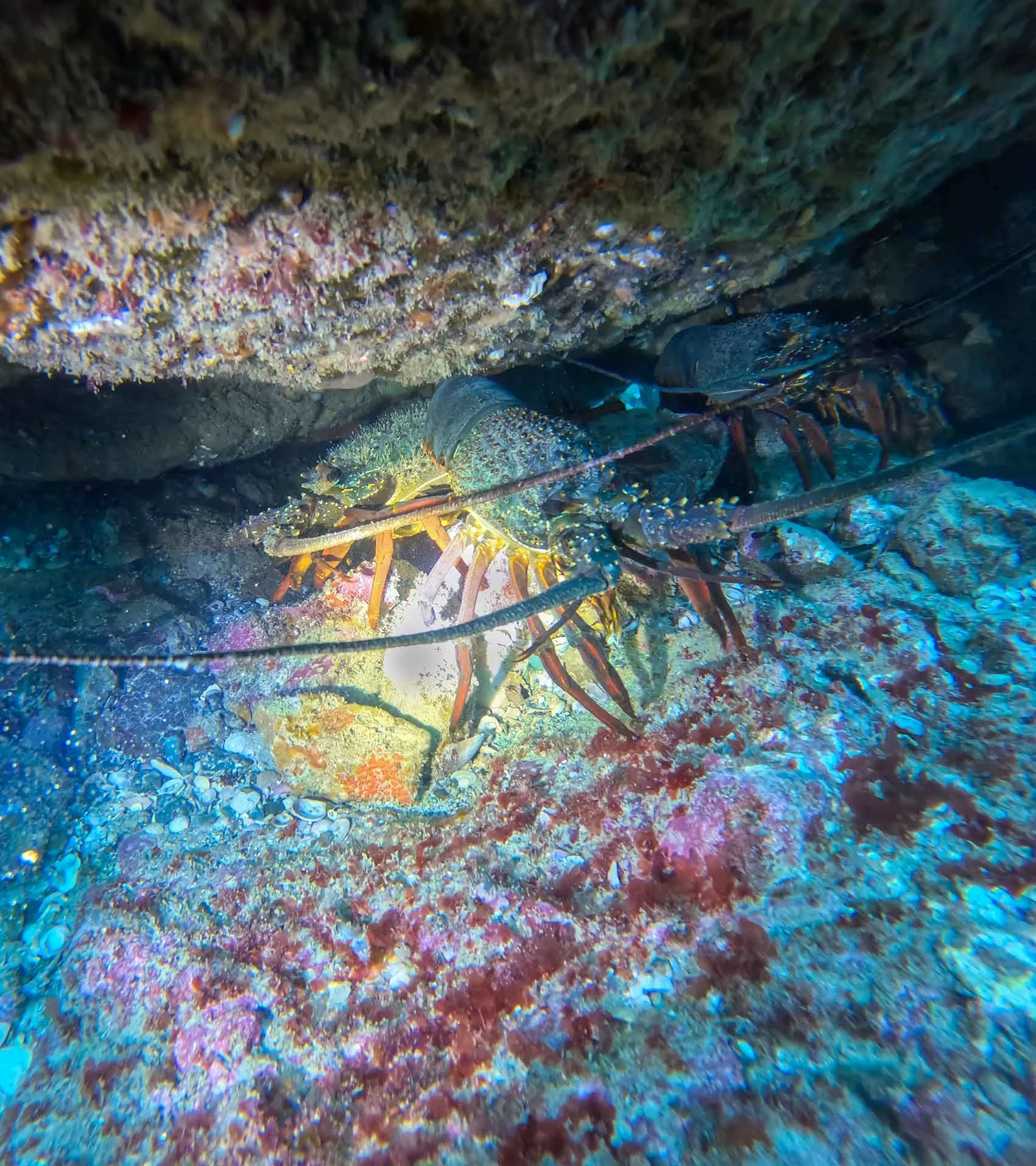
“The old marine reserves may not have been big enough to effectively protect [crayfish] populations.”
Packhorse lobsters (pawharu, Sagmariasus verreauxi) living together on the rocky reef.
Current protections
Q: How effective do you think the current ban on harvesting red rock lobster within the inner Hauraki Gulf is, and how does a partial closure impact the wellbeing of the remaining packhorse lobsters on the reef?
A: The inner Gulf ban is a productive step in the right direction. But a blanket ban on both species would have been better, then all lobsters will just be left alone. With the species specific ban divers might just fill their catch bag up, and then assess if it's the right species at the surface. That's a lot of stress to put an animal through. If we're wanting to promote and create healthy, happy resident lobster populations, but we're still getting divers out there hassling them, they'll be less likely to stay on the reef and effectively perform their ecological role.
Q: The reproduction cycle of lobsters is slower than snapper. How long do you think we will need protection in place to support lobster populations to bounce back?
A: Research on the recovery of rock lobsters across the country has shown that recovery can be rapid, such as in Gisborne, but can also take decades as it's very closely connected to local rates of recruitment. The recovery of kōura at Goat Island back when the reserve was implemented took at least a decade. What I've been finding recently, through looking at trends in our long-term data, is that climatic conditions have potentially shifted unfavourably for kōura recruitment in northeast New Zealand. This means it may take a long time before kōura populations truly recover. I think closures should be looking at a scale of decades rather than years.
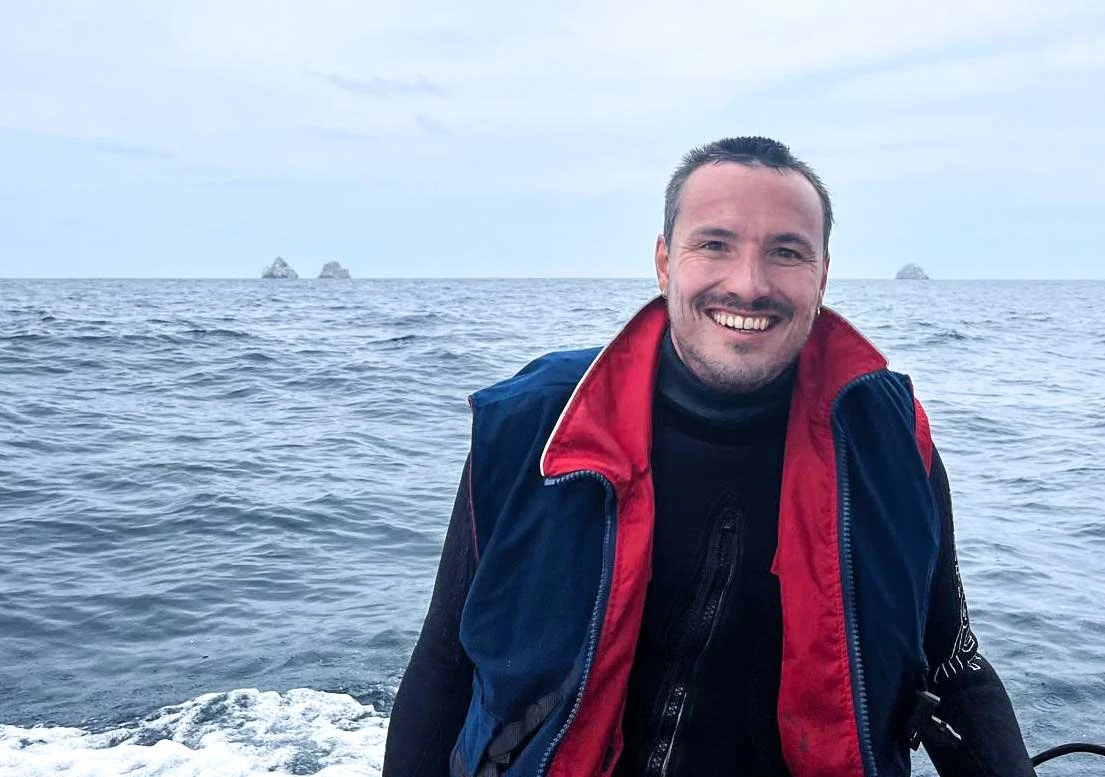
Benn Hanns, working within Tīkapa Moana, te Moananui ā toi, the Hauraki Gulf. (Photo: Louise Wilson)
How TKRI’s community can help
Q: How do you think community and temporary closures can contribute to the long-term recovery of lobster populations at Te Kohuroa Matheson Bay?
A: With more fishery closures, protected areas, and the various work that’s going on, whether explicitly or inadvertently, it shows a step in the right direction. Our fisheries are currently managed using extremely coarse, spatial measures. But as sea temperatures warm up, suitable habitat for cool-water species like kōura may become more fragmented. As kōura population distribution becomes more patchy across our coastlines, the need to have more localised, place-based management strategies to effectively manage this shift in the ecosystem will become more important.
Spatial closures are definitely a step in the right direction. But I think we need to have this more explicitly represented in the fisheries legislation and step away from these broad ways of managing things and be putting stewardship back into local communities, yeah.
Marine reserves are awesome, and they have their use and their place. But you shouldn't exclude the community from being involved in marine management. What TKRI is doing allows engagement through the harvesting of kina, where community take the role of the lobsters or the snapper that we don't have at the moment, until those populations bounce back.
About the Author
Benn Hanns is a research fellow at the University of Auckland. His current research examines the impacts of high-protection areas in the Hauraki Gulf, the status of the Gulf's lobster populations, and the utility of fisheries-independent data for assessments. Read more about Benn’s work here.