
Recollections of the bay with John Hagen
Interview by Joshua McKenzie-Brown.
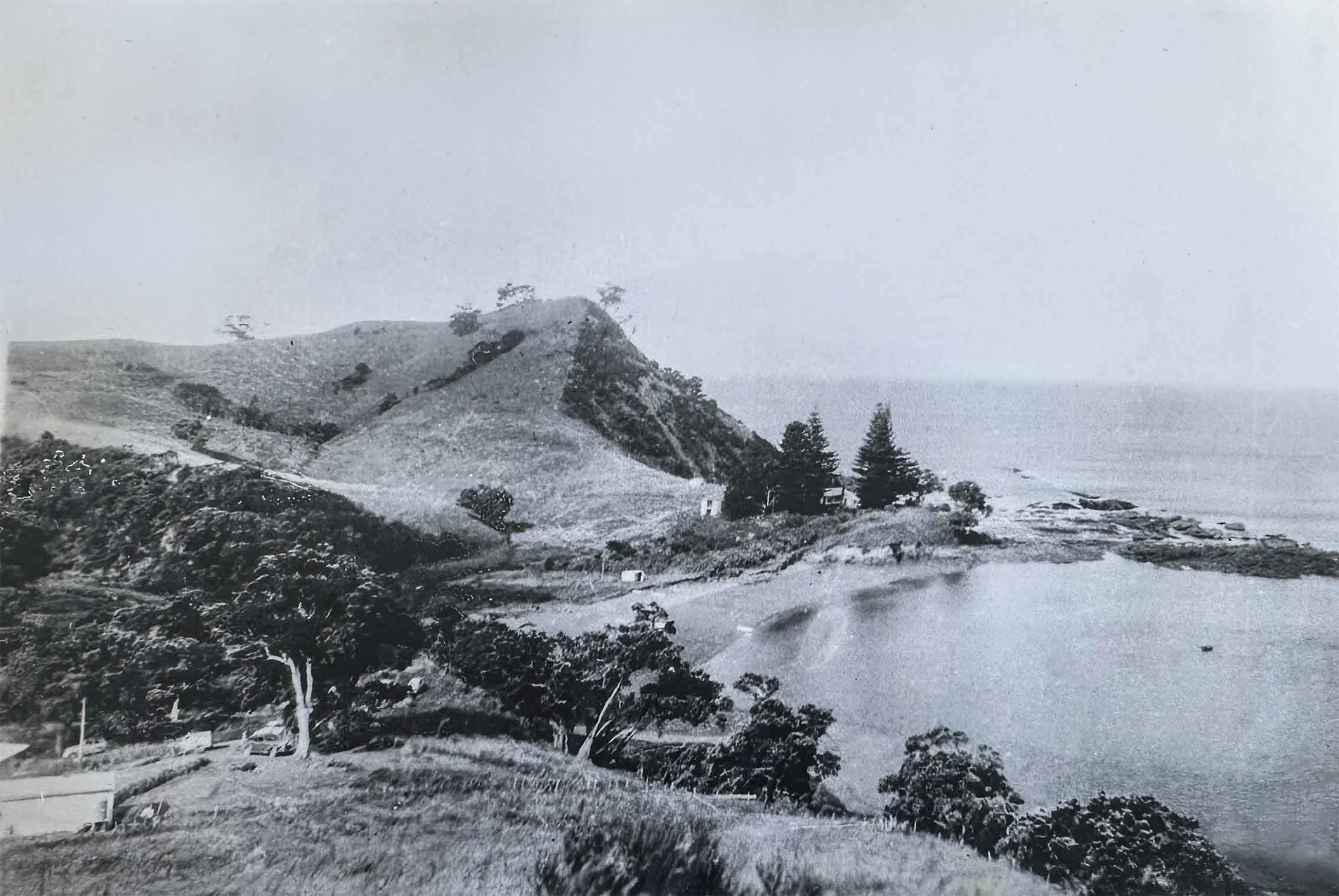
Te Kohuroa Matheson Bay in the 1950’s. (Photo provided by John Hagen).
John Hagen first came to Matheson Bay in the 1950s, when he was just four years old. For him, the bay has always been an intergenerational place, shaped by family, memories, and time spent on the water.
“When I first came to Matheson Bay in the 1950’s I was four years old.
There were no roads in then, no rows of holiday houses, few access points. You arrived and no one knew. My family’s bach stood alone. Dad owned a boatshed right on the beach. There was farmland around us and a few neighbours, but we didn’t see them. No traffic, no carpark or toilet block. Just bush, water and an idyllic escape on weekends and school holidays.
The water was clear in a way that’s hard to imagine now, although we still get good days. The stream running into the bay was pure, swimmable from end to end. You could see the bottom, native fish in the current. The bay itself was the same. Clear enough to see the contours of the seabed, clear enough to see life moving everywhere.”
An interconnected way of life
“Crayfish were so abundant they’d hide in knee-deep water, all the way around the corner to Leigh. Kids would be sent to get a few for dinner. Huge snapper patrolled around the island, solid fish you could see from the rocks. Kingfish were caught most weekends. Rays were everywhere, cruising the shallows, often taking our bait before anything else had a chance. Kina were plentiful, but so were kelp forests. I didn’t eat kina, but my mates did. They were full of roe and healthy.
There was a scallop bed off Torkington Bay. No doubt that’s gone. Bait fish could be caught in the river itself. We had so many species to choose from back then, leatherjackets and parore were considered good table fish. John Dory were a common sight. Nothing was wasted. Nothing felt scarce.
People built boats in the bay back then. There was a wreck too, the anchor was recovered. As I recall, charcoal was shipped out from the area at one point. The area wasn’t untouched by any means, but it was a lot closer to pristine than it is today.”
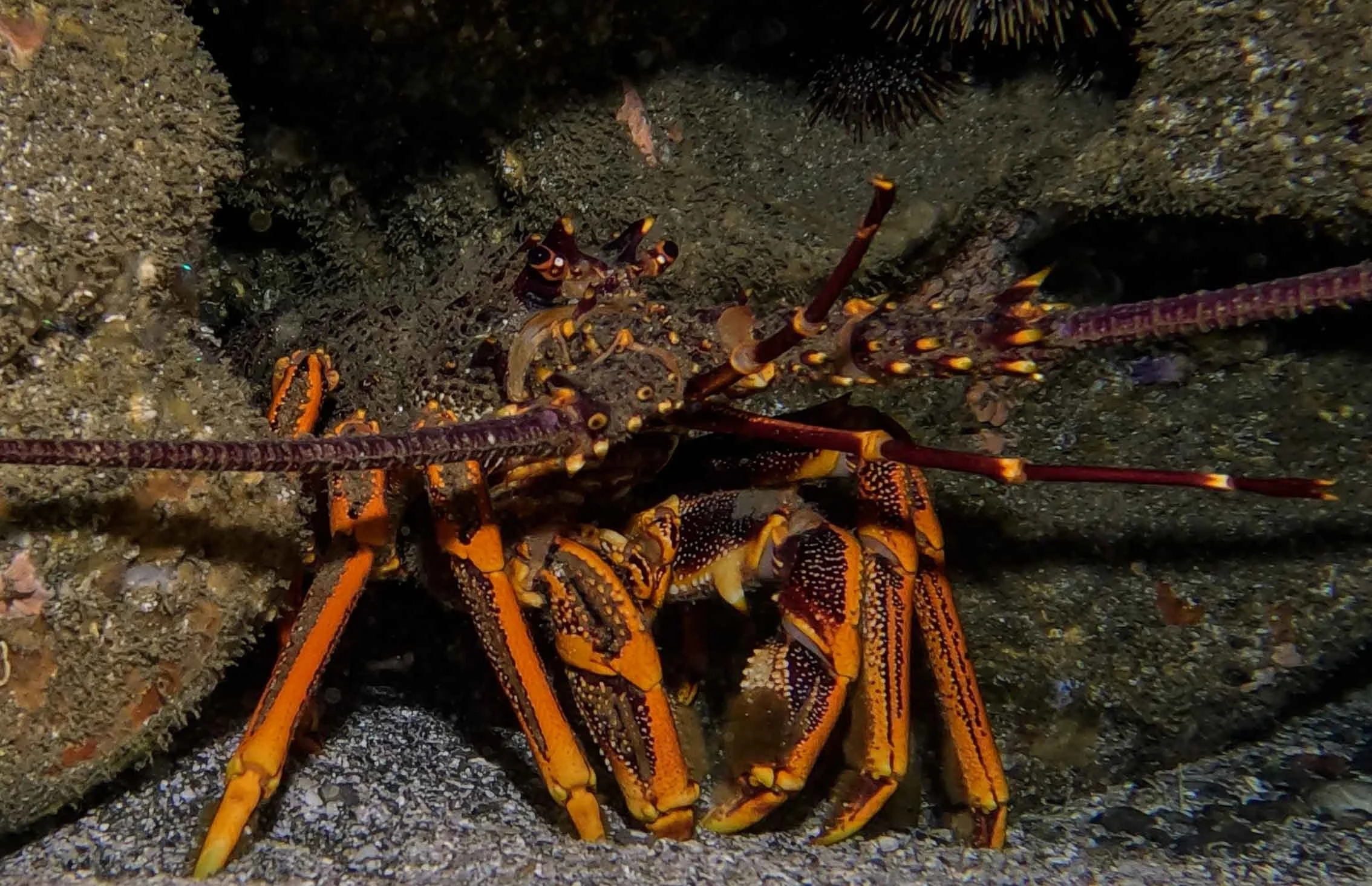
Crayfish / spiny rock lobster used to be abundant at Te Kohuroa Matheson Bay.
(Photo: Benthics.)
What has changed
“In the last thirty years, a lot has changed. Kelp washes ashore in quantities I’ve never seen before, piling up in rotting mats after storms. That kind of accumulation used to be rare. It tells me something has gone wrong. Whether that’s human driven or not, it’s not right.
What worries me most now isn’t just what’s gone, but how people interact with what remains. Rockpooling at night is happening, or so I’ve heard from neighbours. Using torches and buckets, stripping the rocks of everything. Crabs, shells, limpets, little fish, things that used to be left alone. It seems harmless to people, but the damage adds up.
I won’t pretend my generation is blameless. We took abundance for granted. We assumed the sea would replenish itself, that what we removed would return. In hindsight, we were wrong about how resilient these systems really are.
Education is the key. Always has been in my opinion. Getting children involved, showing them what lives here, how it fits together, and what happens when it’s disrupted, matters more than people realise. Enforcement matters too. In all my decades coming to this bay, I’ve never seen a Fisheries officer here. Maybe others have. Regulations mean little if they exist only on paper.
Matheson Bay has always been intergenerational for my family. I’ve been coming here my whole life. My children came with me later. Now my grandchildren do too. That continuity brings responsibility. If new families are going to enjoy this place, they need to be prepared to do what’s required to protect it. Proper waste systems, sensible development, an understanding that convenience has consequences.
There was opposition when a new wastewater system was first proposed. People were concerned it could change the character of the bay, lead to developers moving in. I understand that sentiment.”
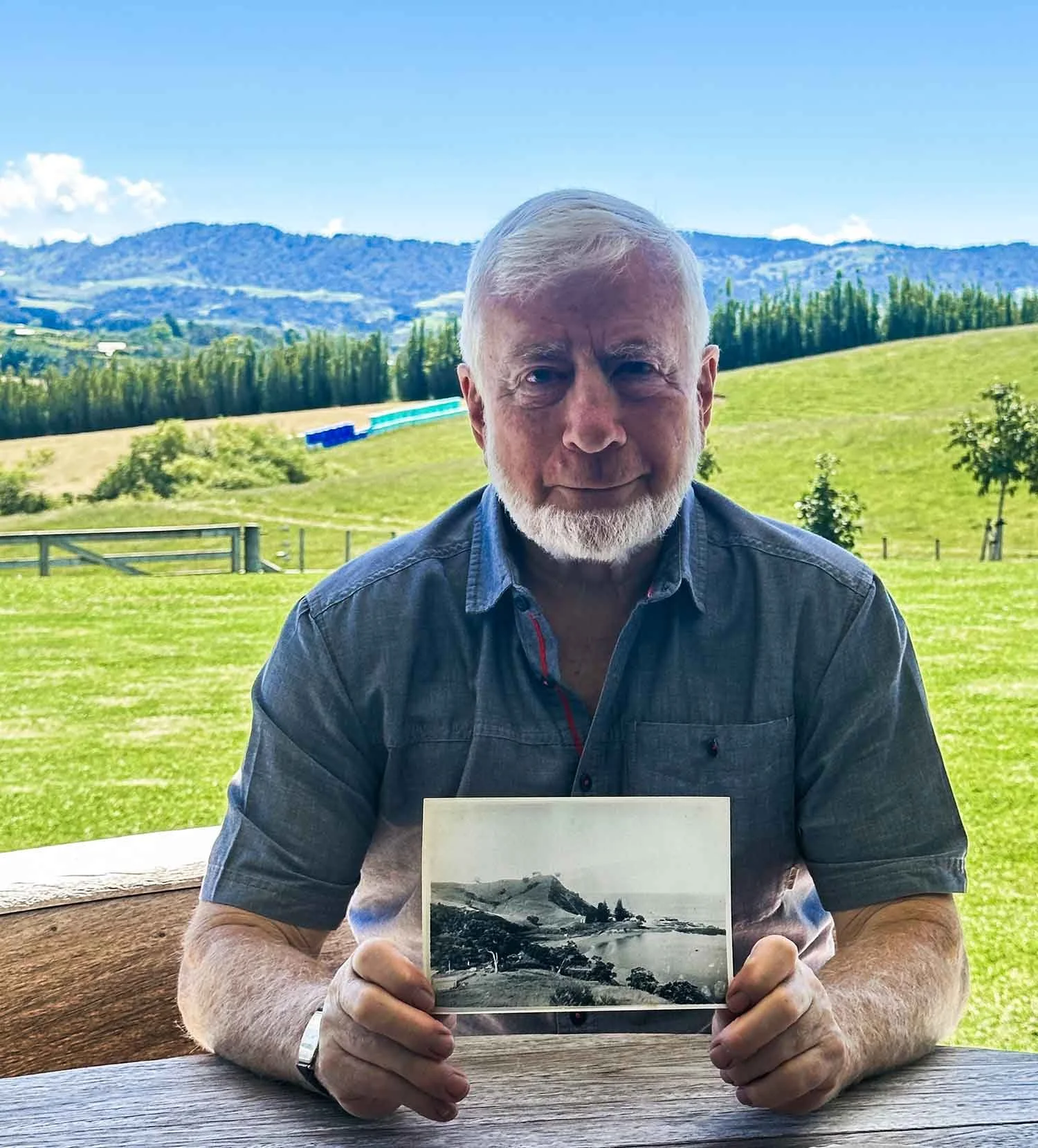
“People generally want to do the right thing if they understand what’s at stake.”
- John Hagen
Reason for Hope
“The difference now is awareness. Young people understand the stakes more clearly. They ask better questions. They’re open to restoration, to doing things differently. That gives me hope.
Not everything is in decline. Thinking about the land, in the last fifteen years, kākā have moved back into the area. They land in our gardens now. That didn’t happen before. Nature responds when given a chance.
Attitude amongst locals today is encouraging. Most people in the community seem to support restoration efforts, on land and sea. People generally want to do the right thing if they understand what’s at stake. This is a special place we’re talking about.
When I think back to Matheson Bay as it was in 1950, I don’t expect it to return to that state. That would be unrealistic. But I believe it can be healthier.”
“The bay looked after us for a long time.
The question facing us now is whether we can give the bay the care it deserves. So that the next generation will know it like I did.”
About the Editor
Joshua McKenzie-Brown is a freelance journalist and novelist whose work sits at the intersection of ocean conservation and crime fiction. A Coastguard volunteer, World Champion adaptive sailor, former biology teacher, and Te Kohuroa Rewilding Ranger, his writing examines human impact on the ocean through science-informed storytelling. Read more about Joshua’s latest novel, South Pacific Cut, here.