Catchment
Monitoring
Program
Te Kohuroa Rewilding works from the ‘ridge to the reef’ to support the marine restoration process. The catchment monitoring program gathers information about freshwater health through water quality testing and biodiversity and habitat surveying, to inform future community-led restoration action.
The catchment monitoring program is building knowledge about the multiple stressors that affect both the freshwater and marine ecosystem at Te Kohuroa Matheson Bay. Pollution from septic tank overflows, excess sediment, nutrient run-off and habitat loss impact the wellbeing of the catchment. Through ongoing monitoring, the community is learning how to restore this important habitat and protect the vulnerable species that live there.
Monitoring Freshwater Health
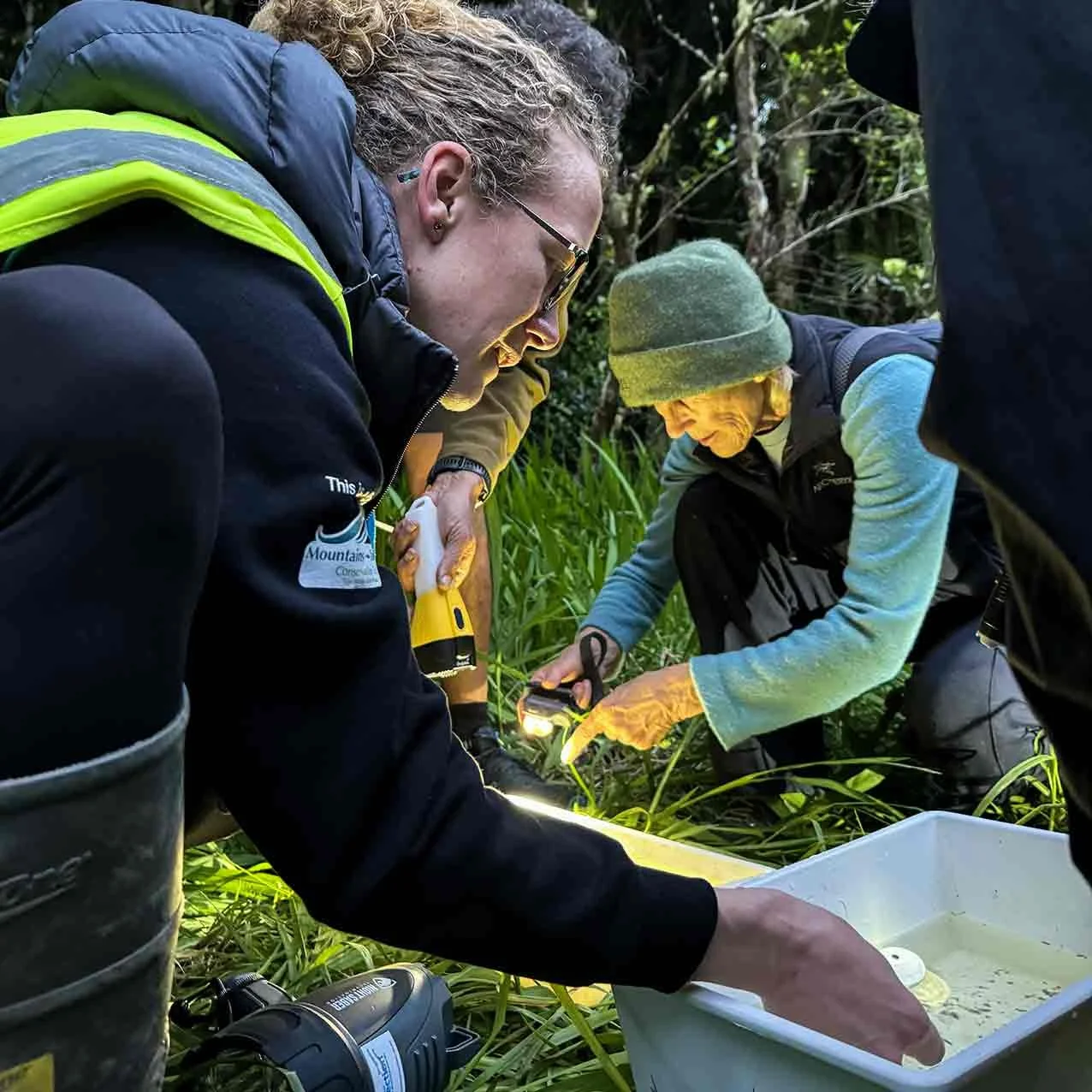
The Catchment Monitoring Process
Te Kohuroa Rewilding’s catchment monitoring program is designed to measure key indicators of freshwater, wetland and forest health. The community undertakes regular SHMAK (water quality) testing, yearly species surveys and works with local conservation groups and experts to support the ongoing health of the catchment’s ecosystem.
Program design
TKRI’s catchment monitoring program was designed with support from MTSCT’s Wai Connection program. Initial baseline surveys identified important habitat and vulnerable species within the catchment. Now, project volunteers continue to carry out long-term monitoring to track changes over time.
Water quality indicators
The Stream Health Monitoring and Assessment Kit (SHMAK) is a science-based ecological monitoring process used by project volunteers to survey water quality. Key indicators are measured (such as water temperature, clarity, dissolved substances and macroinvertebrates) to assess ongoing stream health.
Habitat and biodiversity assessments
The status of key habitat and species is assessed to monitor ongoing biodiversity. Yearly monitoring for īnanga (whitebait) eggs and pekapeka (bats) is carried out within the catchment. Community bioblitzing and Spotlighting events contribute volunteer observations, and an Aquawatch unit is used to measure stream habitat quality at various sites.
Contributing to collective effort
The data collected through the program is uploaded into national databases, helping to build a wider restoration picture for the region. The project also hosts a catchment collective meeting to share tools and outcomes with the wider conservation community.
DID YOU KNOW?
HUMAN ACTIVITY IS THE #1 CATCHMENT STRESSOR
Land-use for farming, housing developments and forestry negatively affects the way catchments function. Reduced native habitat, increased pollutants (carried in rainwater run-off) and climate change events are negatively impacting freshwater health.BIODIVERSITY IS AN ECOLOGICAL INDICATOR
Species such as kōura (freshwater crayfish), pekapeka (bats) and mayflies are sensitive to habitat quality, meaning their presence can indicate a healthier environment.SOME FISH LIVE IN BOTH FRESH & SALT WATER
That’s right! Species such as tuna (eels) and īnanga (whitebait) cross from the ocean to the awa (stream) at various stages of their lifecycles.SEDIMENTATION SMOTHERS SEAWEEDS
Suspended mud from freshwater streams can wash into the ocean and block light in the water column, making it difficult for seaweed to grow.
Why do catchments matter?
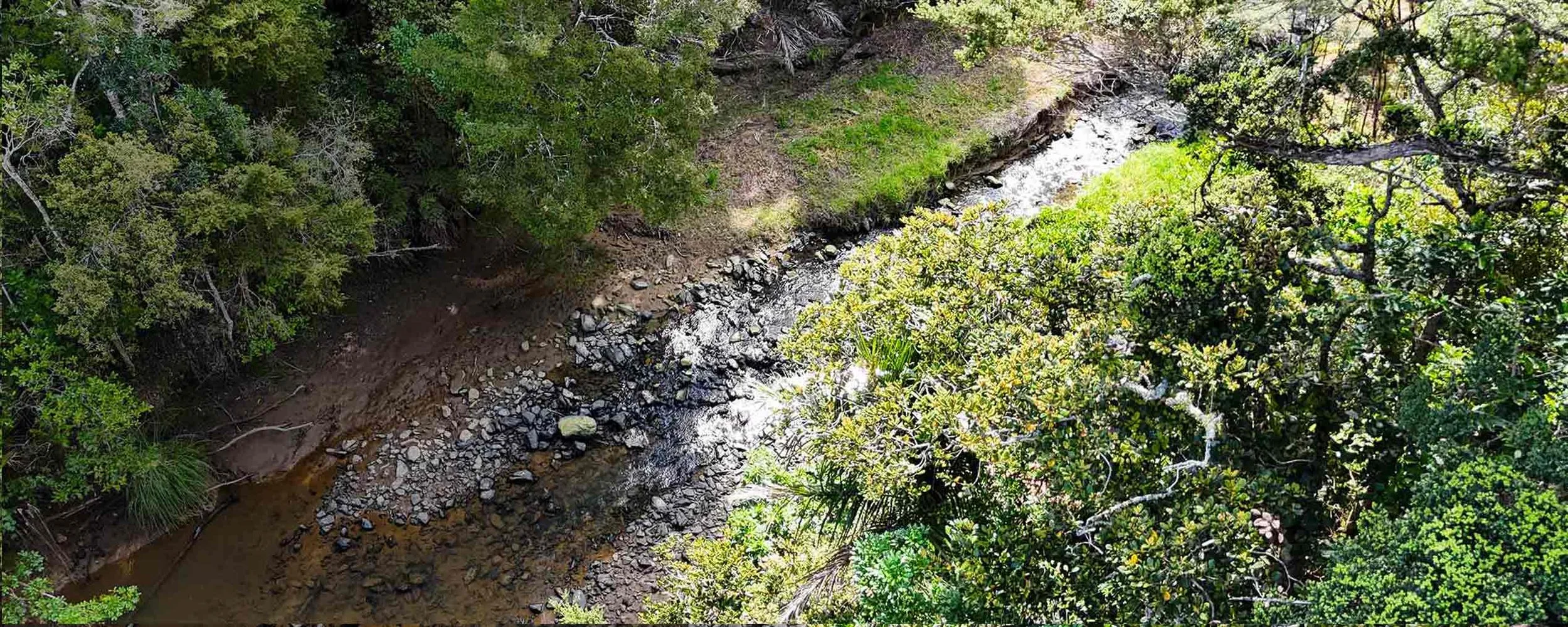
Freshwater catchments provide an ecological bridge between the land and the sea. As rain travels down from the hills of the upper catchment down through the awa (river), it passes through a range of different habitats, such as forest, bush and wetlands. Rivers carry essential nutrients for plants and trees to thrive, which in turn creates cool, sheltered habitat for a wide-range of important species including birds, invertebrates, bats and fish.
Several fish species in Aotearoa rely on both freshwater and marine habitats to complete their lifecycle, including Īnanga / galaxiids (often caught in their juvenile life stage as ‘whitebait’) and tuna (eels). This means both the ocean and the catchment need to be healthy for them to thrive.
Freshwater catchments are influenced by the unique geological and physical characteristics of the whenua (land). Intact freshwater environments prevent land erosion and can protect against flooding. However, long-term human impacts from activities such as land clearing (for farming and forestry), urban development and climate change are putting pressure on catchment wellbeing. Stressors such as sedimentation and pollution travel through the catchment and into the ocean, negatively impacting biodiversity and habitat on a wider scale.
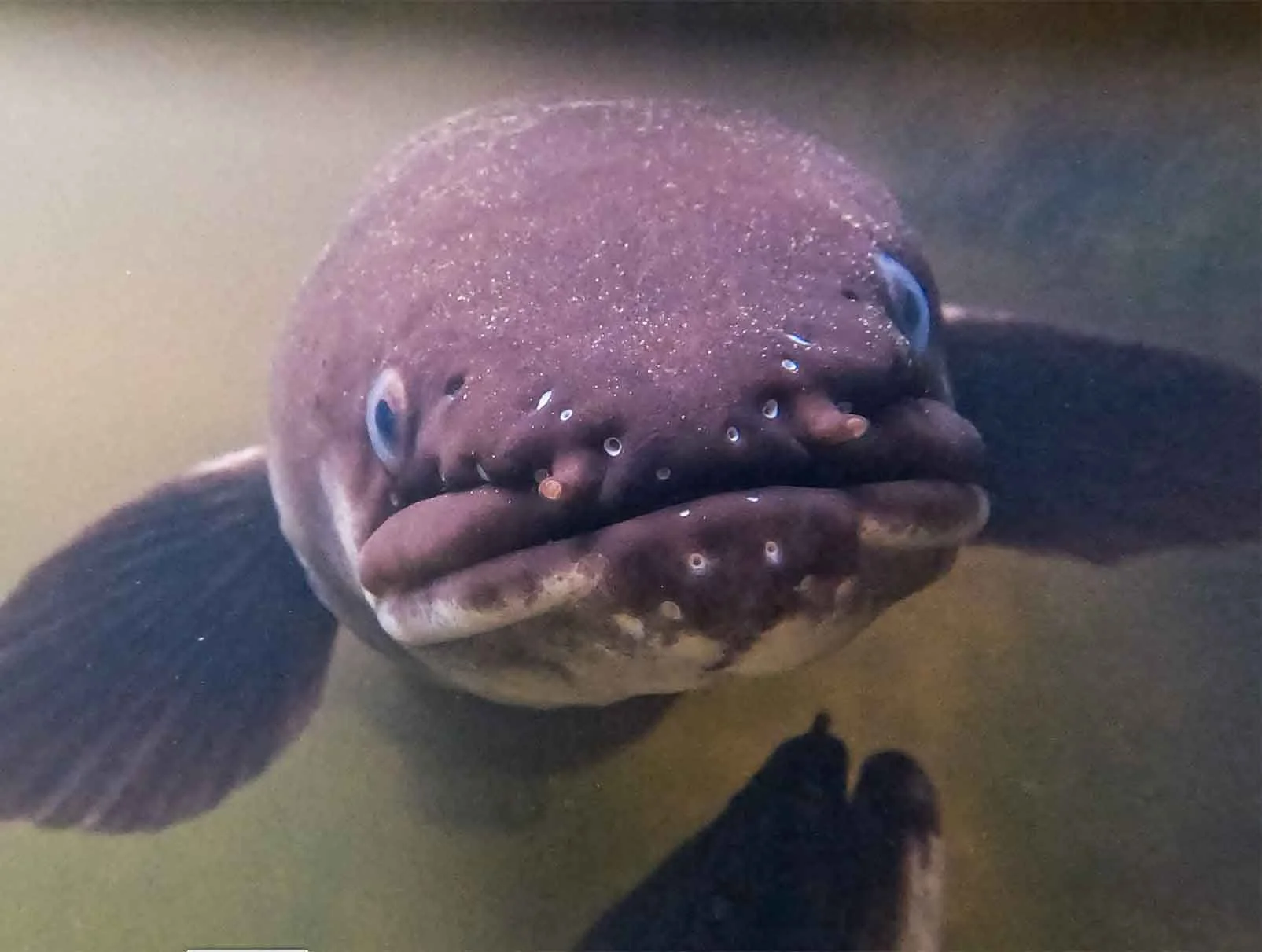
Tuna (eels) are a taonga (treasured) species for Māori. They live most of their life in freshwater. When mature, they travel to the Pacific ocean to breed.
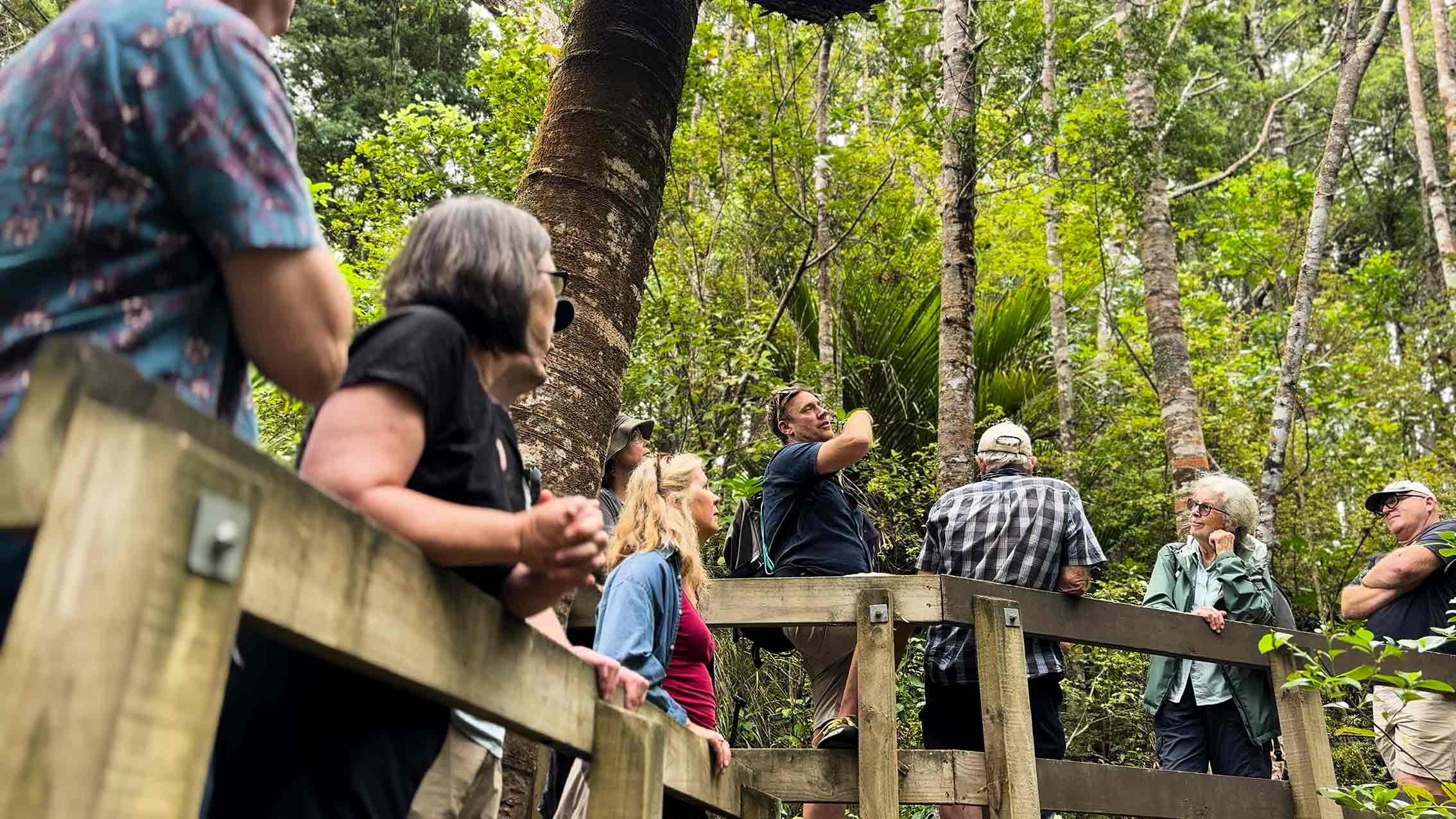
Fredrik Hjelm, bat expert, delivering community education
Become a freshwater volunteer!
Contribute to long-term catchment monitoring.
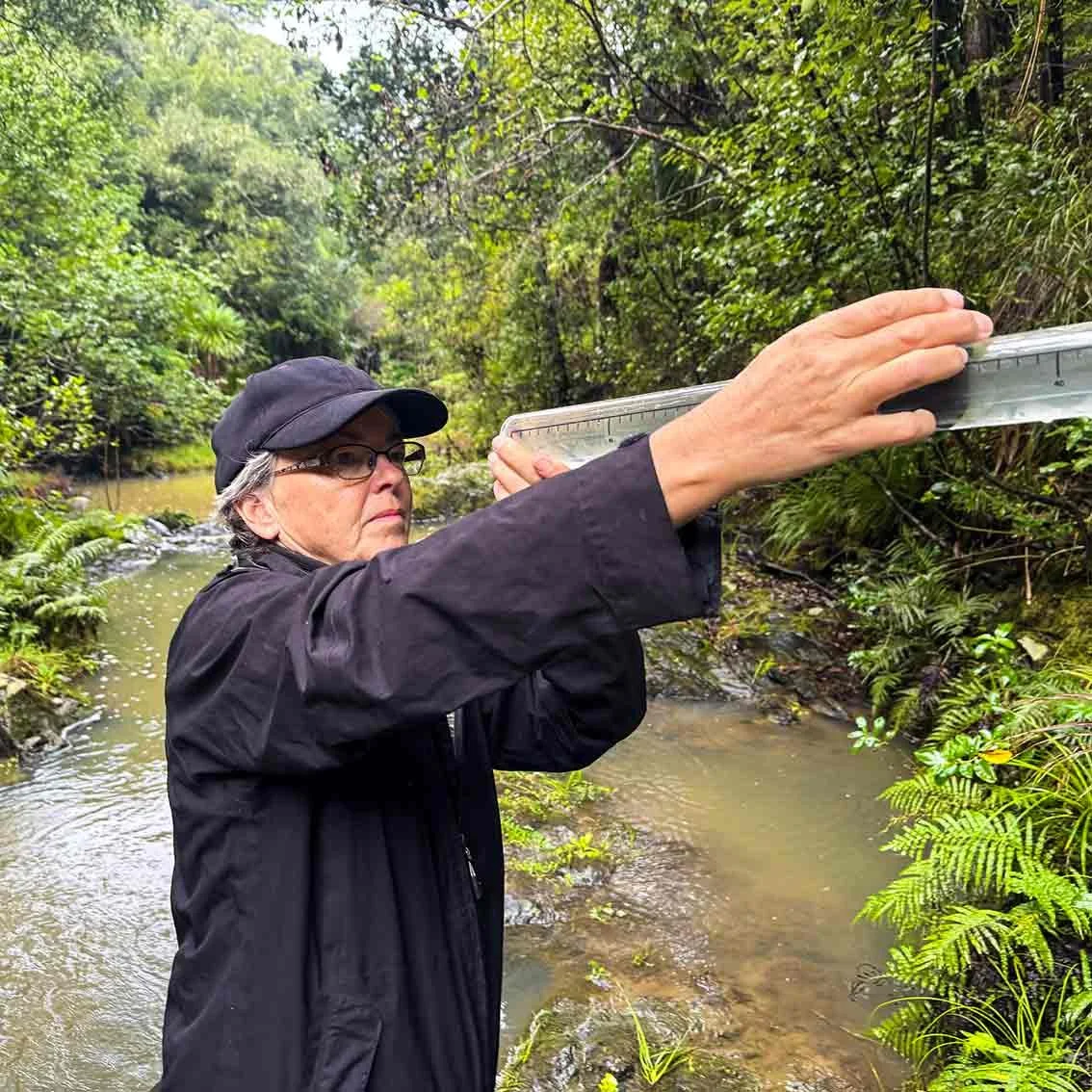
Surveying, education and more
Te Kohuroa Rewilding runs a series of training and surveying events throughout the year to support the ongoing monitoring of the freshwater catchment through community-led environmental guardianship. You can volunteer to participate in:
🌱 Water quality testing - monitor stream and macro-invertebrate health
🌱 Spotlighting - a family-centred activity, exploring biodiversity at night
🌱 Habitat protection - care for critical habitat and vulnerable species
🌱 Training and workshops - attend fish survey training and bat workshops.
Check out our upcoming events to find out how to get involved through the link below.
Kelp Restoration | Freshwater Catchment | Rewilding Rangers
Want to learn more about our community restoration outcomes?