
What the water tells us
Words by Callie Shelley.
Photos by Benthics
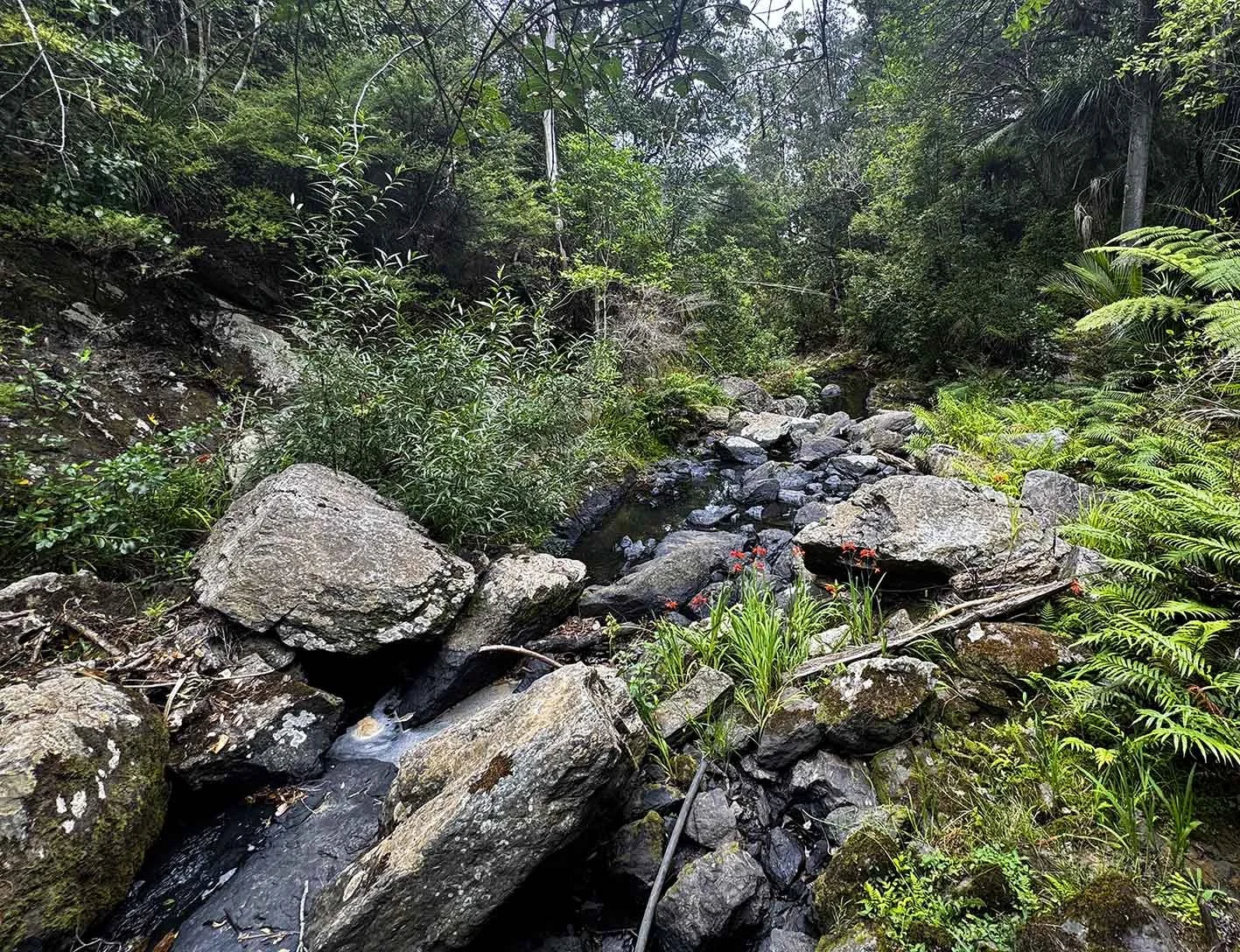
Te Kohuroa awa (river) provides an ecological bridge between the whenua (land) and the moana (ocean).
Te Kohuroa Matheson Bay is an important, interconnected ecosystem.
The connection between the awa (stream) and moana (ocean) facilitates an essential ecological bridge for a wide-range of species from the hills to the bay. The lush, freshwater catchment supports a variety of native plants, birds, fish, and microorganisms that all play a role in the wellbeing of the wider ecosystem. The moana flows up into the awa at high tide, providing a saline habitat and an essential nursery ground for species such as īnanga (whitebait) and tuna (longfin eels), who spend part of their lifecycle out at sea.
While the freshwater catchment is beautiful, the wellbeing of the Kohuroa awa is increasingly impacted by human-based stressors. Soft sediments (such as silt and mud) are washed from land higher in the catchment by heavy rainfall, especially in large storm events. This fine, suspended material hangs in the water column, clouding the water and depositing mud further downstream. Additional pressures such as bacteria from septic tank runoff, gravel road pollution from nearby roads, and erosion of the foliage along the riverbanks compound the impacts of sedimentation and pollution, which collectively travels down into the moana.
While these challenges are not unique to Te Kohuroa Matheson Bay, they are part of an increasingly wide-scale problem being recorded across Te Moananui-a-Toi the Hauraki Gulf, and they highlight the need to better understand what is happening locally in Kohuroa awa, and how these stressors affect the wider ecosystem.
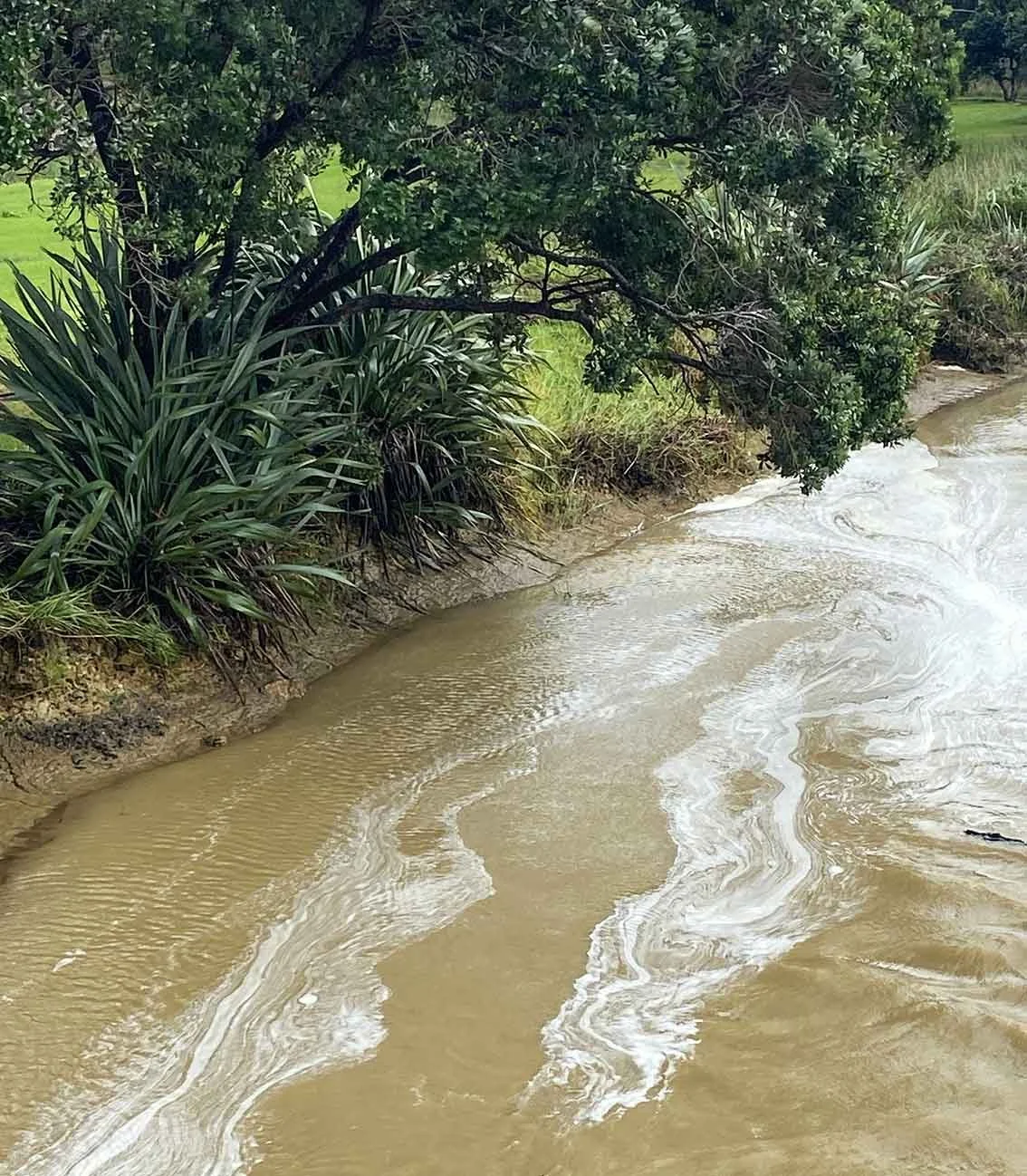
“Kohuroa awa is increasingly impacted by human-based stressors.”
Above: Suspended Sediment washing down the Kohuroa awa after a storm.
Learning how to read changes.
This year, TKRI is working in partnership with Auckland Council and AquaWatch to take an important step forward in assessing water quality health and map the unique stressors affecting Te Kohuroa Matheson Bay.
The AquaWatch program is an international program that facilitates data collection and monitoring through their WaQA (water quality analysis) device. The WaQA is light and portable, and floats (while connected to a tether) in streams and rivers to collect continuous water quality data. With guidance from the AquaWatch team, TKRI has recently installed a device near the base of the catchment.
TKRI’s new WaQA unit is empowering community volunteers to observe how the awa changes by measuring how the water quality responds to heavy rainfall and storm events in real time. The location of the device captures the status of water flowing into the ocean and sits close to a known īnanga spawning site. Since sedimentation can affect spawning (reproductive) success, monitoring these conditions is an important part of protecting this and other species.
Building a long-term picture.
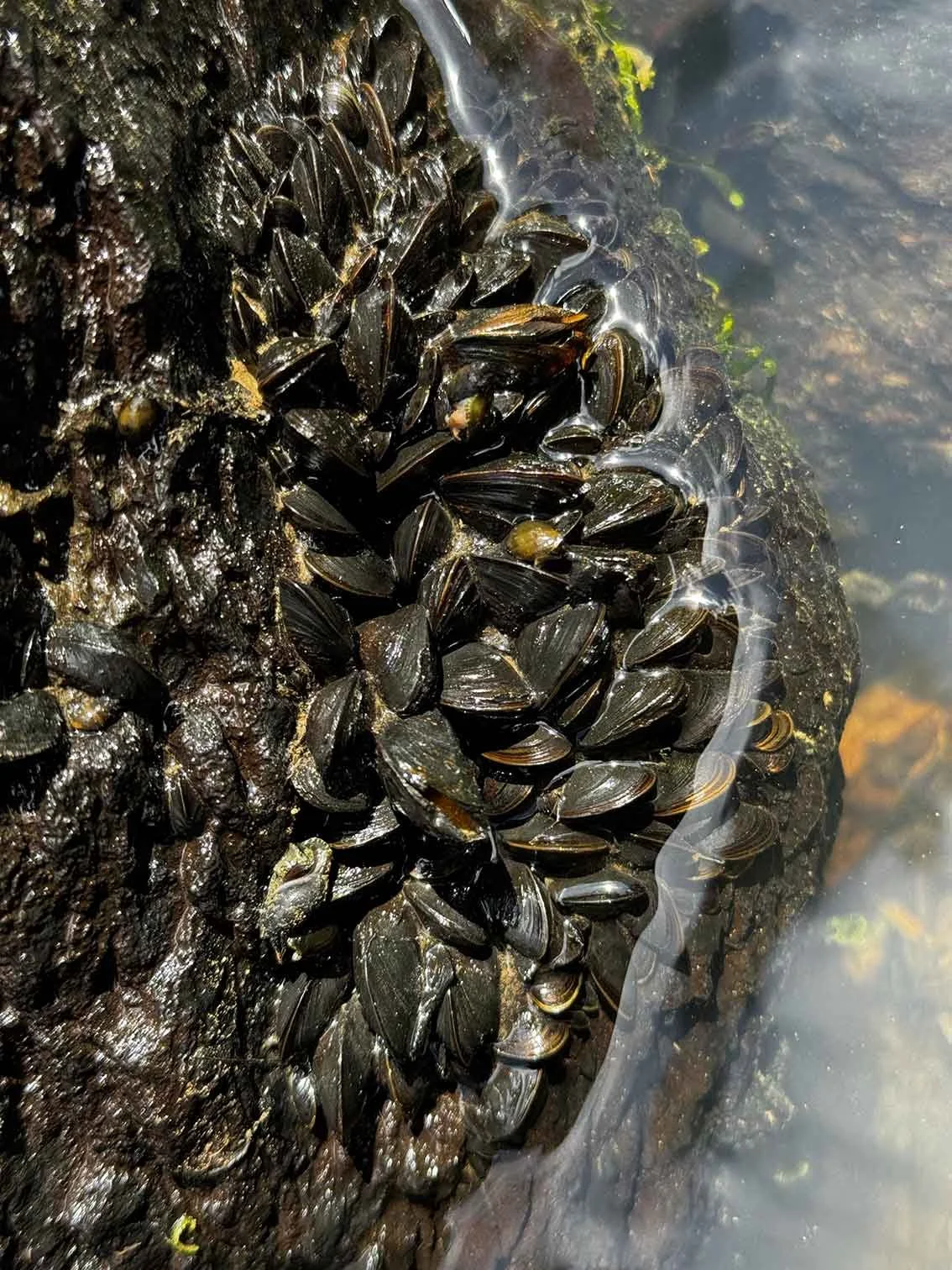
Kākahi (Echyridella menziesii), the little black mussel, filters sediment from the water.
Over time, the growing dataset from the WaQA will help guide informed decisions about how the community can restore and care for the environment at Te Kohuroa Matheson Bay. To ensure we are collating useful data, we have set three key goals for this technology:
In the short term, we aim to begin collecting real-time water quality and sediment movement to learn about how turbidity and pollutants increase during rainfall events.
In the mid term, we will use this information to build a clearer picture (through prediction models) of what is moving through the awa under different conditions. This helps establish a baseline of the current state of the stream and its potential impacts on local species.
In the long term, we will track changes over time. As restoration planting and community-led initiatives continue throughout the catchment, this dataset will help us measure whether environmental stressors are reducing and whether further action may be needed.
What the water tells us.
The WaQA device is a great addition to our ongoing water quality program and will help the community to listen to the needs of the Kohuroa awa and surrounding environment to support future regeneration planning. While SHMAK water quality testing is carried out manually on a seasonal basis, the WaQA provides continuous data and tracks additional parameters, giving us a more complete picture of the awa’s health.
Our team of dedicated Rewilding Rangers will continue to maintain the WaQA device by performing regular cleaning and checks, ensuring the data remains accurate and reliable.
Together, this work strengthens our understanding of the awa–an essential link between the freshwater and marine ecosystems of Te Kohuroa Matheson Bay. By understanding what flows through the system, we are better equipped to restore and protect it for the species that depend on it, and for future generations.
Next time you’re walking the Te Kohuroa nature trail and spot the WaQA device, take a moment to consider the role it plays in protecting this special place
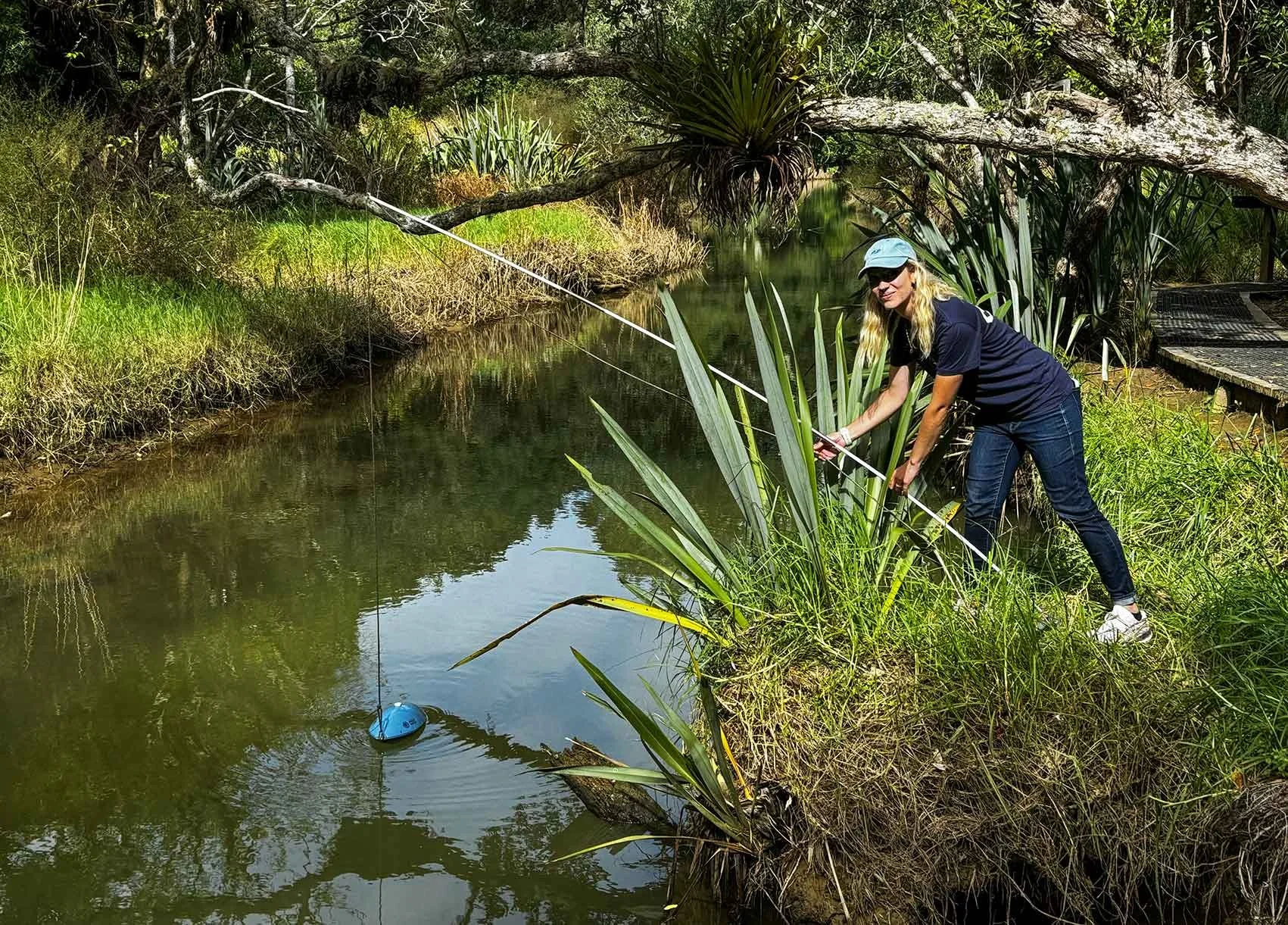
TKRI Coordinator, Callie Shelley securing the WaQA device on the Kohuroa riverbank.
About the Author
Callie Shelley is a marine ecologist, and TKRI’s Community Coordinator. She is passionate about bringing communities together over shared values that support the protection of the environment. Callie leads the Rewilding Ranger program and supports volunteers to carry out freshwater monitoring that informs future restoration efforts, and increase the wellbeing of the Kohuroa catchment.