
Rewilding Ranger interview: Heidi Börner
Interview and photos by Benthics.
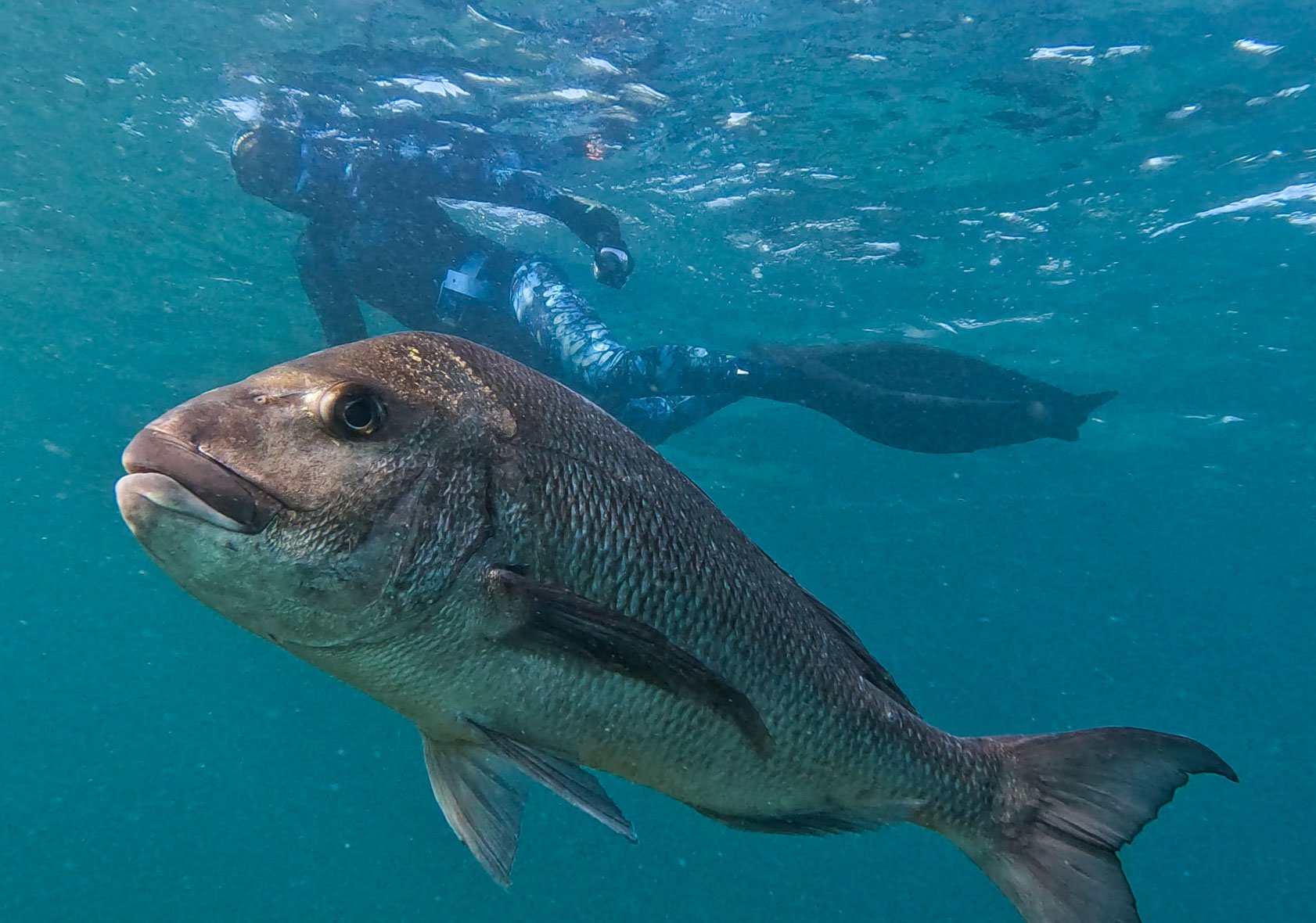
Heidi snorkelling at Te Hāwere a Maki Goat Island marine reserve with ‘Scratchy’, a resident tāmure (snapper).
TKRI’s Rewilding Ranger program gives volunteers the opportunity to dive into the ocean and measure the positive impacts of the community’s kelp restoration activities.
Heidi Börner has been volunteering with Te Kohuroa Rewilding (TKRI) since 2024. She lives close to the bay, is an experienced ocean swimmer and has always had a deep connection with the ocean. Through her involvement with TKRI’s Rewilding Ranger program, Heidi has continued to build her freediving skills to become a core member of the community’s marine monitoring team. She contributes to the surveying program each year by taking part in the quadrat survey process.
Measuring kelp growth
Q: Tell us a bit about the community-led surveying process
A: One way to check for changes in kelp forest health on the rocky reef is by carrying out surveys using a quadrat. A quadrat is a 1 metre-squared measuring tool used to assess habitat. For the community-led surveys, we use quadrats made of plastic tubes connected together into a square, and with a string on each side to divide it into four quarters. This means we can consistently measure one square metre of reef and easily see what 25% looks like.
Each volunteer carries their own quadrat, dive slate and a pencil as we snorkel out to the reef. The plastic slate is for writing down our observations, and we use a pencil because the marks don’t wash away in the water. The goal is to work together as a team to collect a set of random quadrat assessments within each restoration zone, which represent different parts of the reef’s habitat in each measurement. When we get to the restoration site, we carefully place the quadrat down in an area of reef, then snorkel down to observe what's there and record the measurements, then we move to the next area. We do 8-10 fin kicks to get to the next measurement spot and try to keep that consistent to help randomise the measurement.
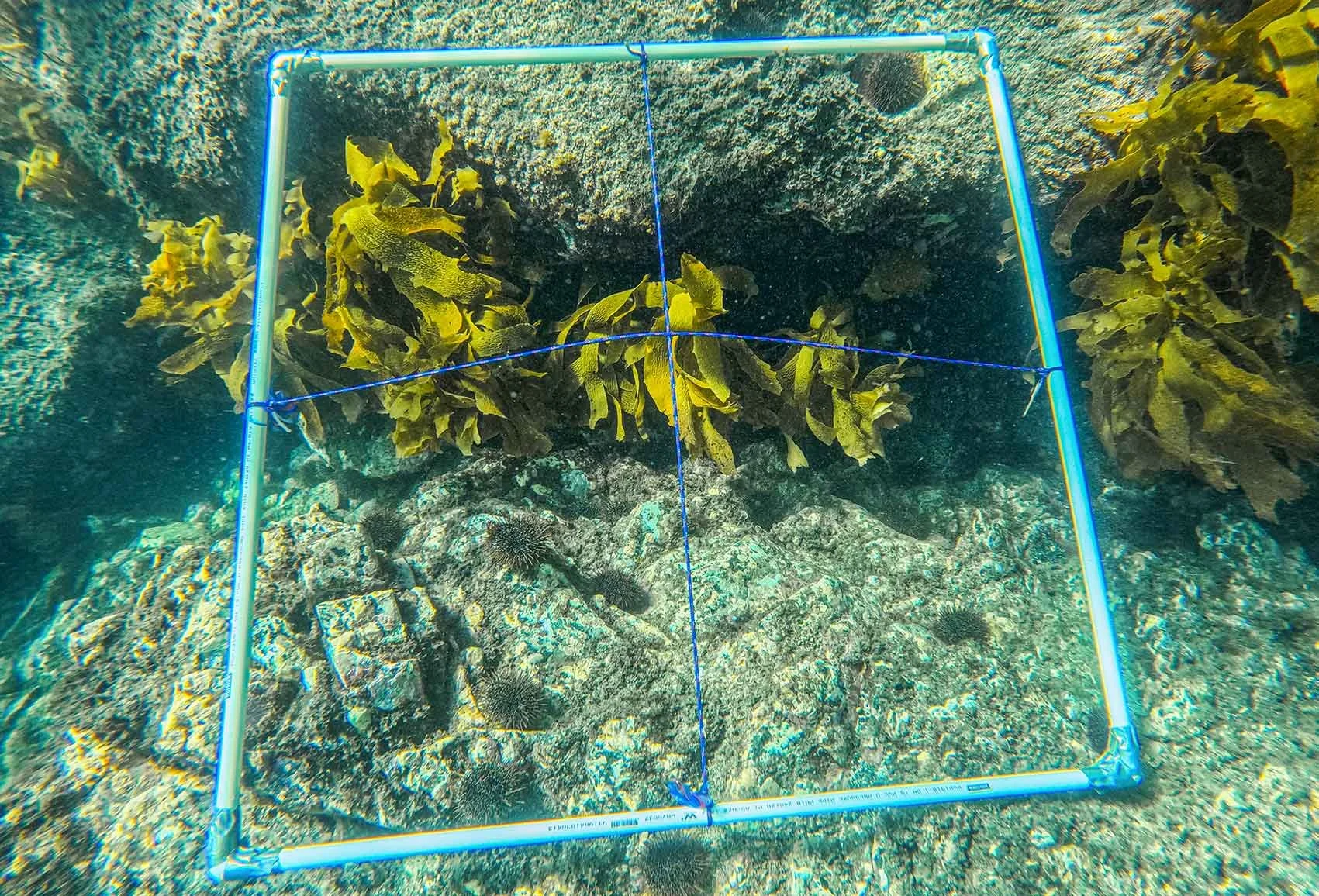
A quadrat sitting on rocky reef habitat within the community restoration site.
Q: What are the key reef health indicators the community-led surveys assess?
A: For TKRI we measure the following in each quadrat:
Kelp - measured as a percentage of the quadrat
Brown algae (brown seaweeds) - measured as a percentage of the quadrat
Exposed kina - Kina that are sitting exposed on the rocky substrate
Cryptic kina - Kina that are actively hiding, for example, in rocks, under seaweed, or ones that have covered themselves with leaf ‘hats’ or shells.
We put a column for each of these observations onto the slate, along with the date, quadrat number, and location (zone) of the observation. We may do 15-20 quadrats per snorkel, which can take about an hour. Often we take a backup photo with a gopro so we can check the quality of the observation.
At the end, we put the data together and can see how the area has changed from the last time we did a quadrat survey. Surveying is definitely weather-dependent. Rough water can make snorkelling and freediving challenging because currents can move the quadrat and make it difficult to stay stable when looking under rocks for cryptic kina. We always follow a health and safety protocol and make sure we check the conditions before we carry out a survey.
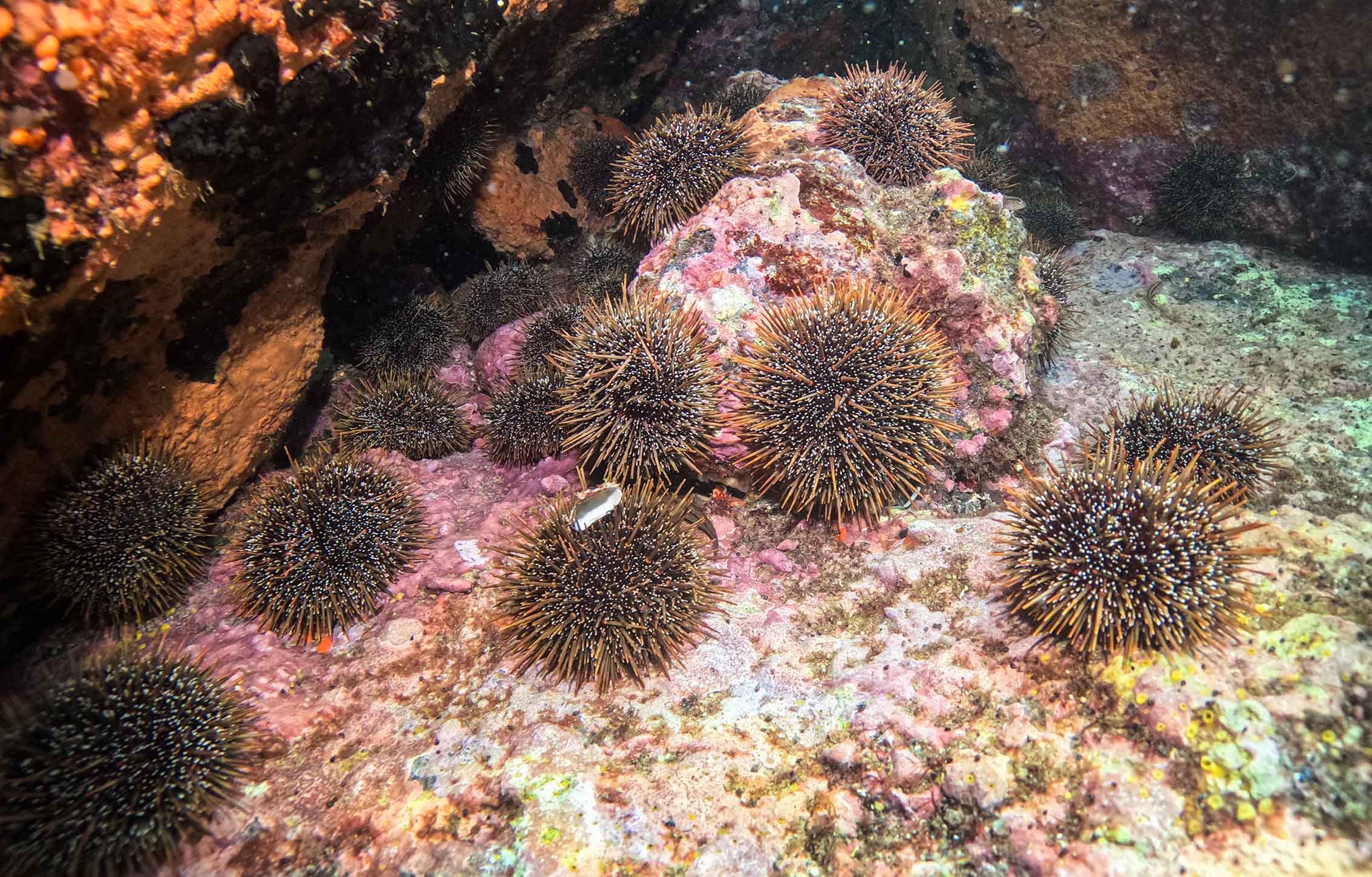
Kina (sea urchins) in barren areas are often found sitting exposed on the reef, due to the lack of predators.
Doing something positive
Q: What do you enjoy about doing the community-led surveys?
A: I enjoy doing the quadrat surveys of the reef because I can spend time having a really good look at what is going on. There are always changes that we don’t capture in the quadrat data, and those are exciting to see. I love seeing the increase in kelp growth and greater biodiversity. Being in the ocean also means I have a greater chance to see dolphins!
Q: What does the Rewilding Ranger program offer you?
A: Being a Rewilding Ranger offers a rare chance to do something positive to rebalance the ocean’s health. It is rewarding to know you are part of a small group of people who are working hands-on to improve the ocean and coastal environment. Showing others what is possible is an empowering feeling, even if the mission seems daunting and big. I like that I can be a part of a project that offers people hope and empowerment. The more I learn about the ocean, the more I see how much there is to learn, and I love that!
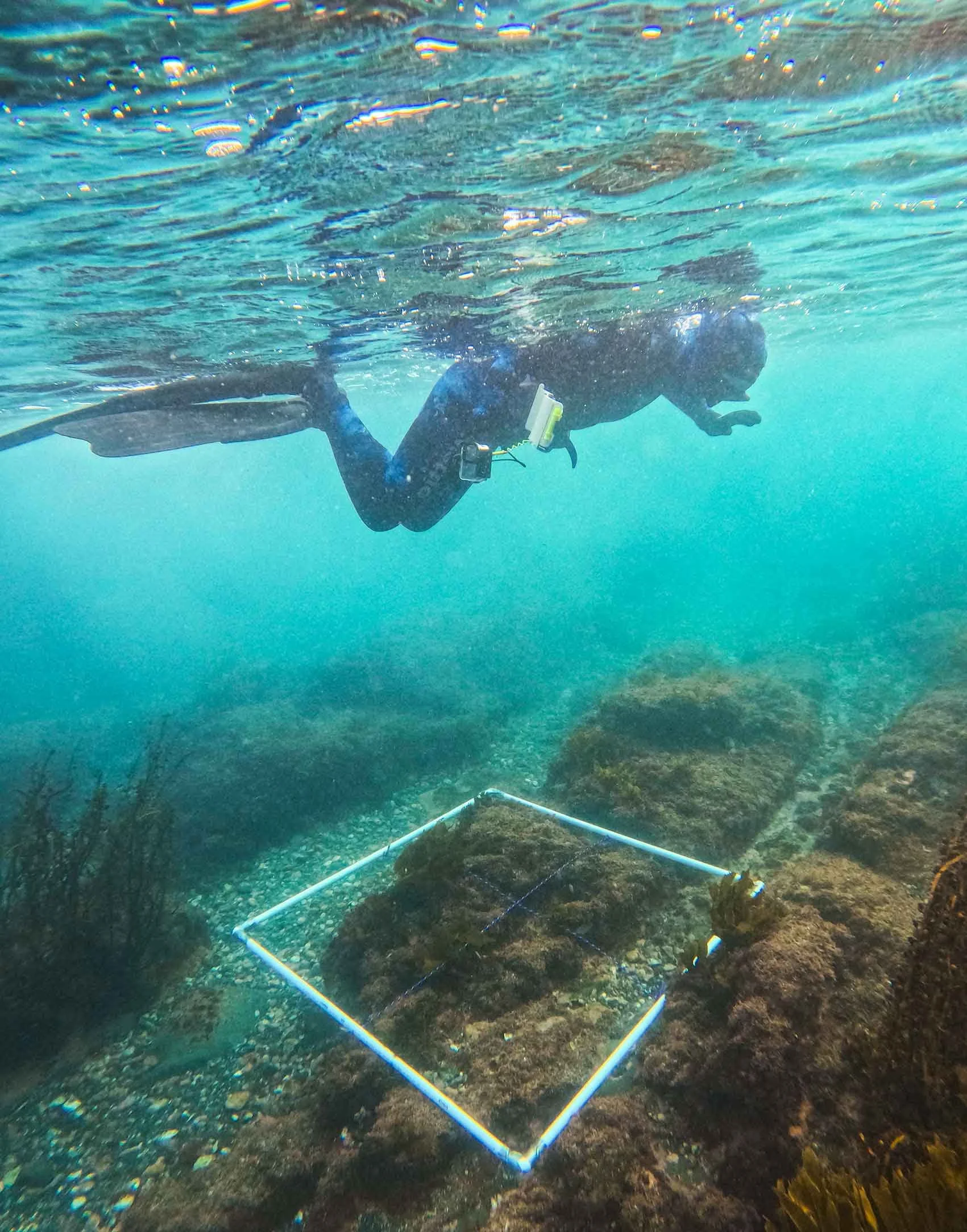
“The goal is to work together to collect a set of random quadrat assessments within each restoration zone.”
- Heidi Börner
Why Rangering is worthwhile
Q: Why do you think others should get involved?
A: Participants in the rewilding ranger program get a hands-on opportunity to contribute to ocean conservation. Helping to make the ocean healthier by participating in rewilding shows people how to look at the ocean differently because of the experience it gives them.
TKRI offers a huge opportunity to have that experience right here in our own backyard, right here where people live. With new knowledge of the ocean and rewilding, people’s relationship to the ocean and coast changes. It offers people hope, empowerment, knowledge, and the chance to be part of a small but beautiful global rewilding community.
Thank you Heidi, for this valuable insight into your volunteering journey with Te Kohuroa Rewilding, and for all the mahi you have done over the last few years to support the community’s rewilding journey.
About the Author
Heidi Börner is an ocean swimmer, freediver and children’s book author with a deep affinity for the ocean. She volunteers her time to support the marine monitoring program at Te Kohuroa Matheson Bay and the wider TKRI’s project. When she is not enjoying time with her family, she travels the world to dive with the ocean’s mega fauna.