
Diving for Kelp: My Rewilding Journey
Words by Tegan Baker, photos by Benthics.
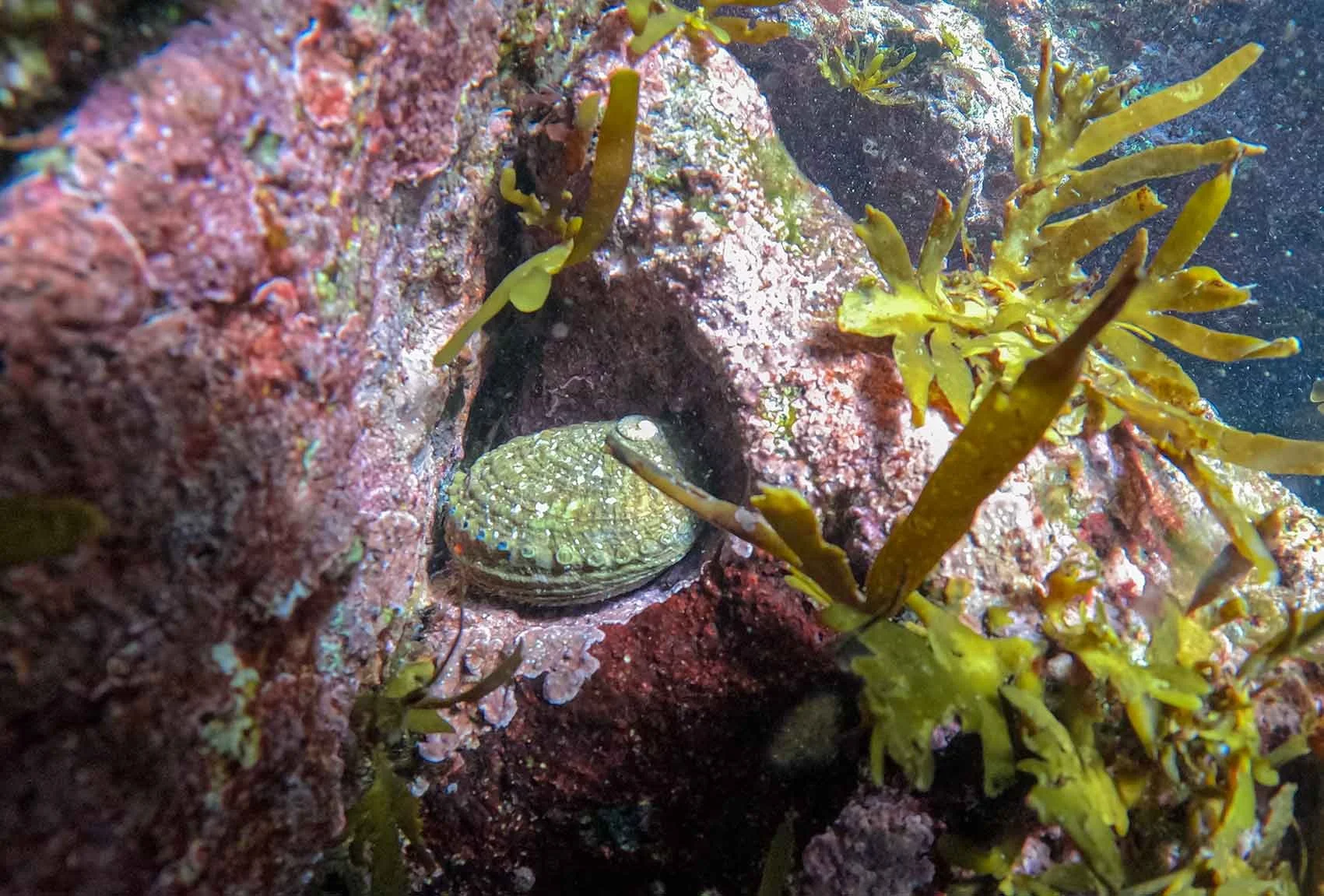
A juvenile yellow foot paua (Haliotis australis) sheltering in TKRI’s kelp restoration site.
After volunteering with Te Kohuroa Rewilding, master’s student, Tegan Baker decided to direct her research into supporting local restoration projects by measuring the cost of ocean rewilding.
The first time I swam out at Matheson Bay with Te Kohuroa Rewilding volunteers, I was struck by the contrast. Some patches of reef were still alive and vibrant. But much of the seafloor was stripped bare and grazed down to rock by kina (sea urchins). Seeing these barrens up close was confronting, but also motivating. I knew I wanted to help.
I joined Te Kohuroa Rewilding because it was a community project that genuinely cared about the moana (ocean). Volunteers weren’t just talking about the problem; they were in the water, masks on, fins ready, spending hours removing kina to promote kelp regrowth. It was inspiring.
But one thing became clear early on as I got to know the project team: funding is a constant challenge. Community projects like this often struggle to get financial support. Funders want to know if volunteer-driven efforts can really make a measurable difference. That question became the spark for my master’s research.
As an environmental science student, I wanted to find a way to make a real difference in marine conservation, not just sit behind a desk reading about it. I’ve always loved the ocean and marine life, and that passion has been there since I was young. At the same time, I really enjoy working with people and being part of a community. Getting involved with Te Kohuroa Rewilding gave me the chance to bring those two things together. Caring for the moana and working alongside others who share the same passion. It also gave me a way to shape my research into something that could add real value to the project.
Instead of waiting years to measure kelp regrowth and with the time constraint of my masters due date, I worked with the project team to understand what kind of research would be most valuable to them. I decided to focus on something more immediate: how much kina volunteers could remove and what it cost per hectare. I wanted to see if community mahi (action) could be both practical and cost-effective in the efforts to restore coastal ecosystems.
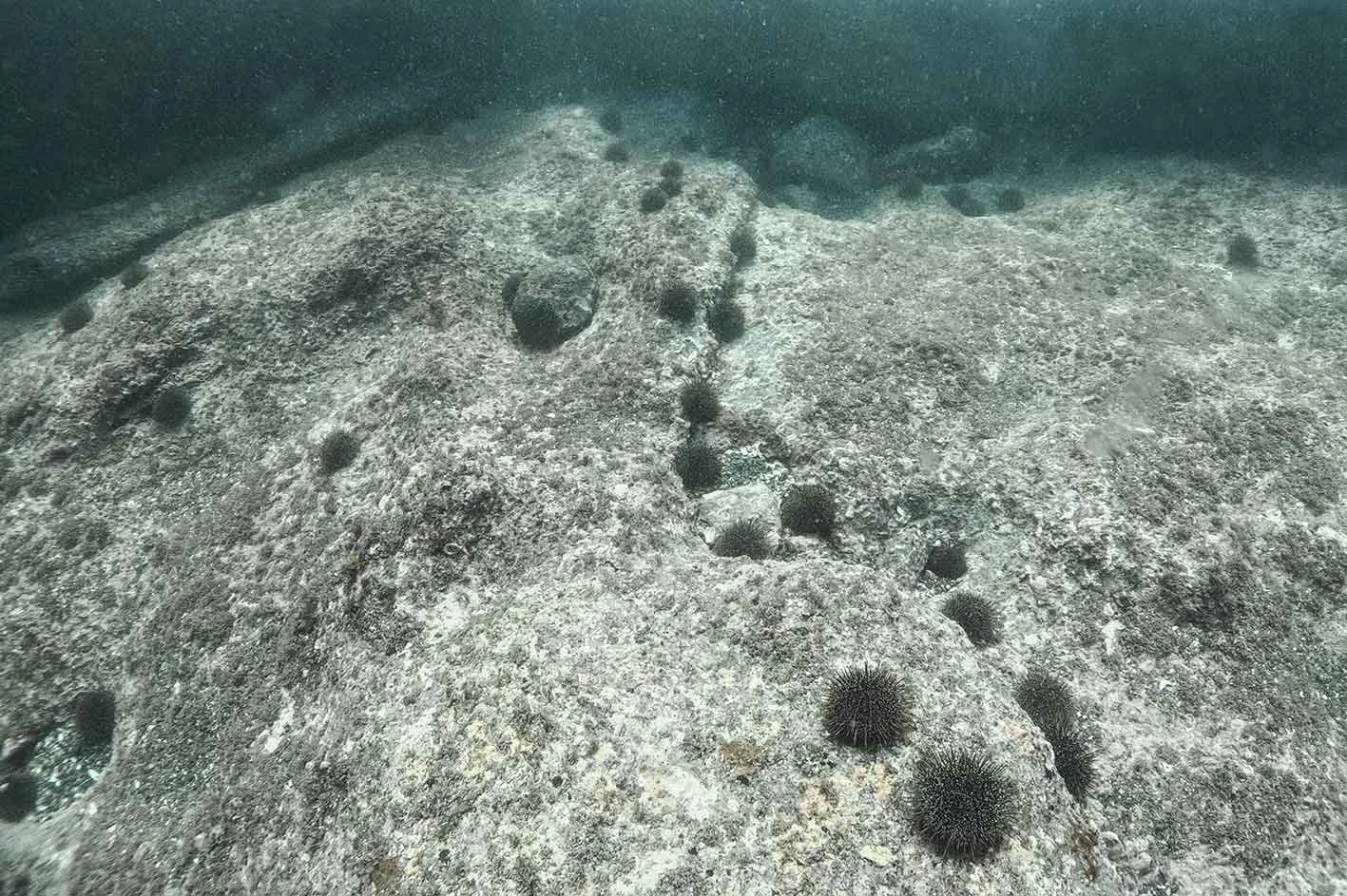
Barren habitat, outside the kelp restoration site at Te Kohuroa Matheson Bay.
Asking the right questions
As part of my master’s degree at AUT, I needed to design a research project that could be completed within two semesters and fit within the scope of a 60-point thesis. The project had to be achievable in that timeframe, scientifically robust, and relevant to real-world environmental management. Measuring kelp regrowth directly would have taken years, so I needed a focus that was practical but still meaningful. I was fortunate to have Dr. Dan Breen as my supervisor, known for his contribution to coral research and with a strong background in marine ecology and restoration. was really supportive in helping me shape the project so it balanced both academic requirements and community value. The questions we can up with were:
How many kina can volunteers remove in an hour?
What does that effort cost?
How does it compare to professional removals or the “free” work done by predators in marine reserves?
I knew that by taking careful notes on kina counts, dive times, and volunteer effort at the project’s rewilding events, I would be able to turn community mahi (action) into numbers that funders and policymakers could hopefully use to support more community-led marine conservation in the future. Across 10 removal events at Matheson Bay, volunteers spent a combined 260 hours in the water, removing a total of 15,075 kina. That level of effort shows just how much dedication and energy the community put into the project.
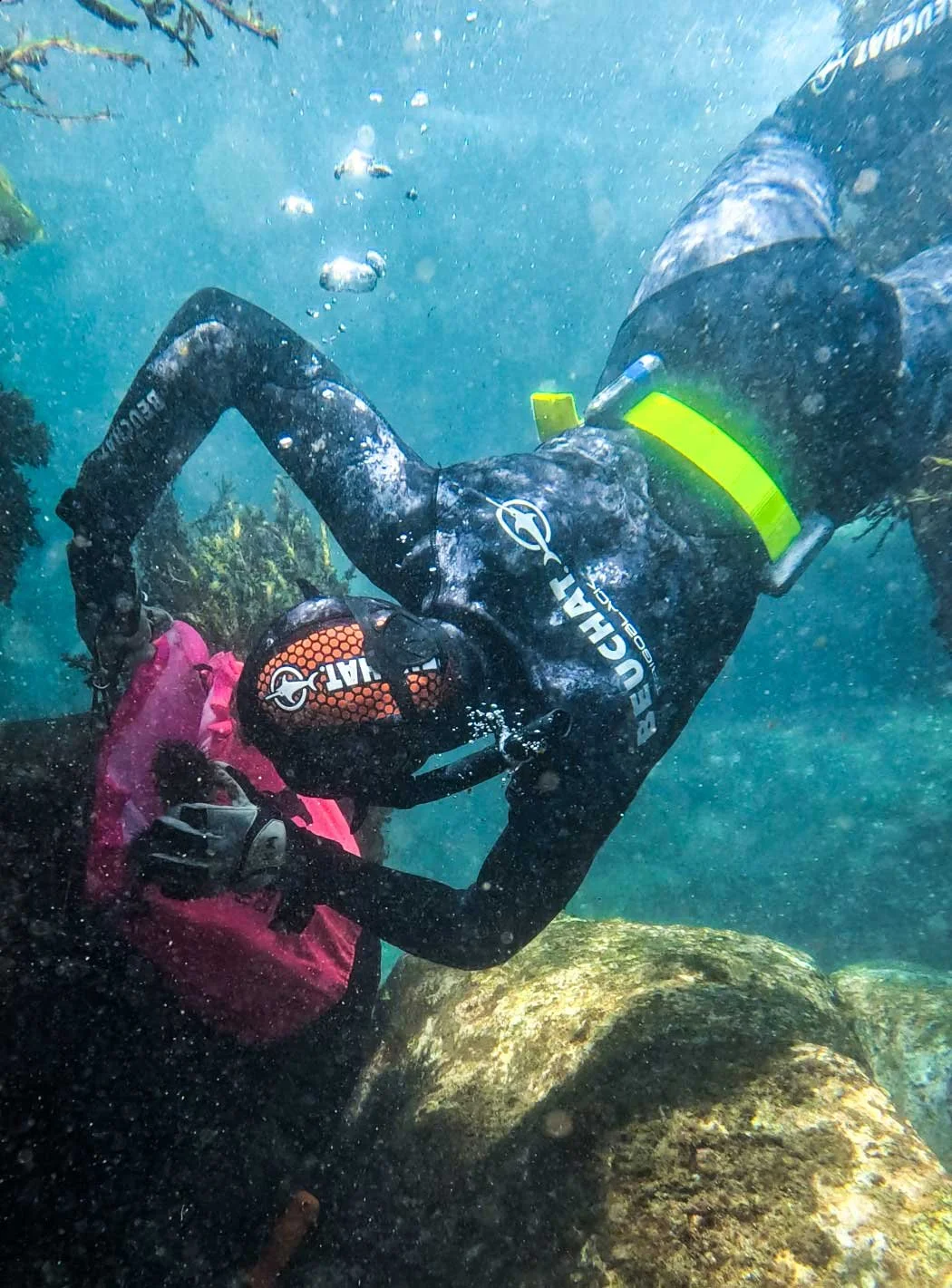
“Seeing barrens up close was confronting, but also motivating. I knew I wanted to help.”
- Tegan Baker
Defining the value of community rewilding
What I found was that volunteer efficiency varied widely, from around 20 to over 1,500 kina per diver-hour depending on the conditions and removal process. On average, the cost of volunteer effort worked out to about $1,681 per hectare, far lower than many restoration projects around the world, which my research found can exceed $15,000 per hectare. Scaling this approach across Northland’s roughly 3,000 hectares of kina barrens suggests a potential community investment of around $5 million (just for volunteer effort, excluding equipment, administration, and miscellaneous costs). Significant, yes, but modest compared to the ecological and economic value of restored kelp forests.
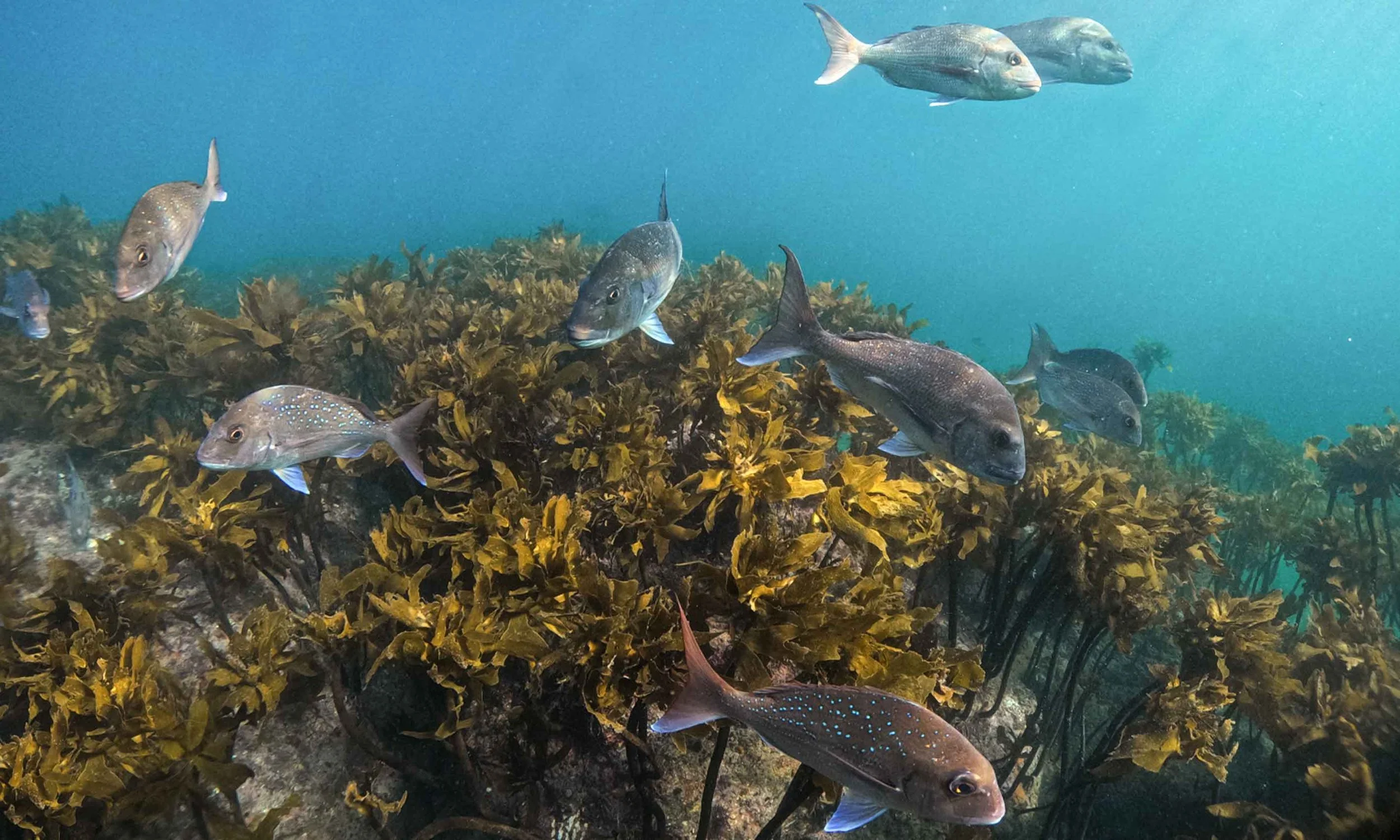
Resident tāmure (snapper), who play a vital role in kina population management at Te Hāwere-ā-Maki / Goat Island Marine Reserve.
The hidden value of nature’s ecosystems
One of the biggest insights was the role of predator-rich marine reserves. Large snapper and crayfish naturally keep kina populations in check, preventing barrens and letting kelp recover, all without ongoing costs. It’s a reminder that ecology and education need to go hand in hand. Supporting rewilding volunteers to understand why barrens exist and the role of predators, helps wider communities to value both short-term interventions and long-term protection.
The takeaway is clear: community action isn’t just symbolic. It works. But kina removals alone won’t solve the problem. The best path to full ecosystem restoration combines short-term volunteer removals with long-term predator protection in marine protected areas to secure lasting gains.
For me, being part of Te Kohuroa Rewilding has been about more than numbers. It’s about what happens when people come together for the moana (ocean). Neighbours, whānau, and volunteers side by side. Restoring kelp restores ecosystems, but it also restores our connection to place, to each other, and to the ocean we care about. I would highly recommend future master students to get involved in community projects where there is the opportunity. As at the end of the day my thesis grew into more than something I needed to complete for my own studies. It became something that can make a difference to future communities and the health of the ocean.
About the Author
Tegan Baker is an Environmental Science master’s graduate with a strong passion for marine ecosystems and the people connected to them. With a background in psychology and environmental science, she loves to explore the intersection between human behaviour and environmental outcomes, with a strong interest in driving positive change for younger generations. She is currently based in Tauranga, working in the GIS field.