
Interview by Benthics, photos from the Leigh Penguin Project.
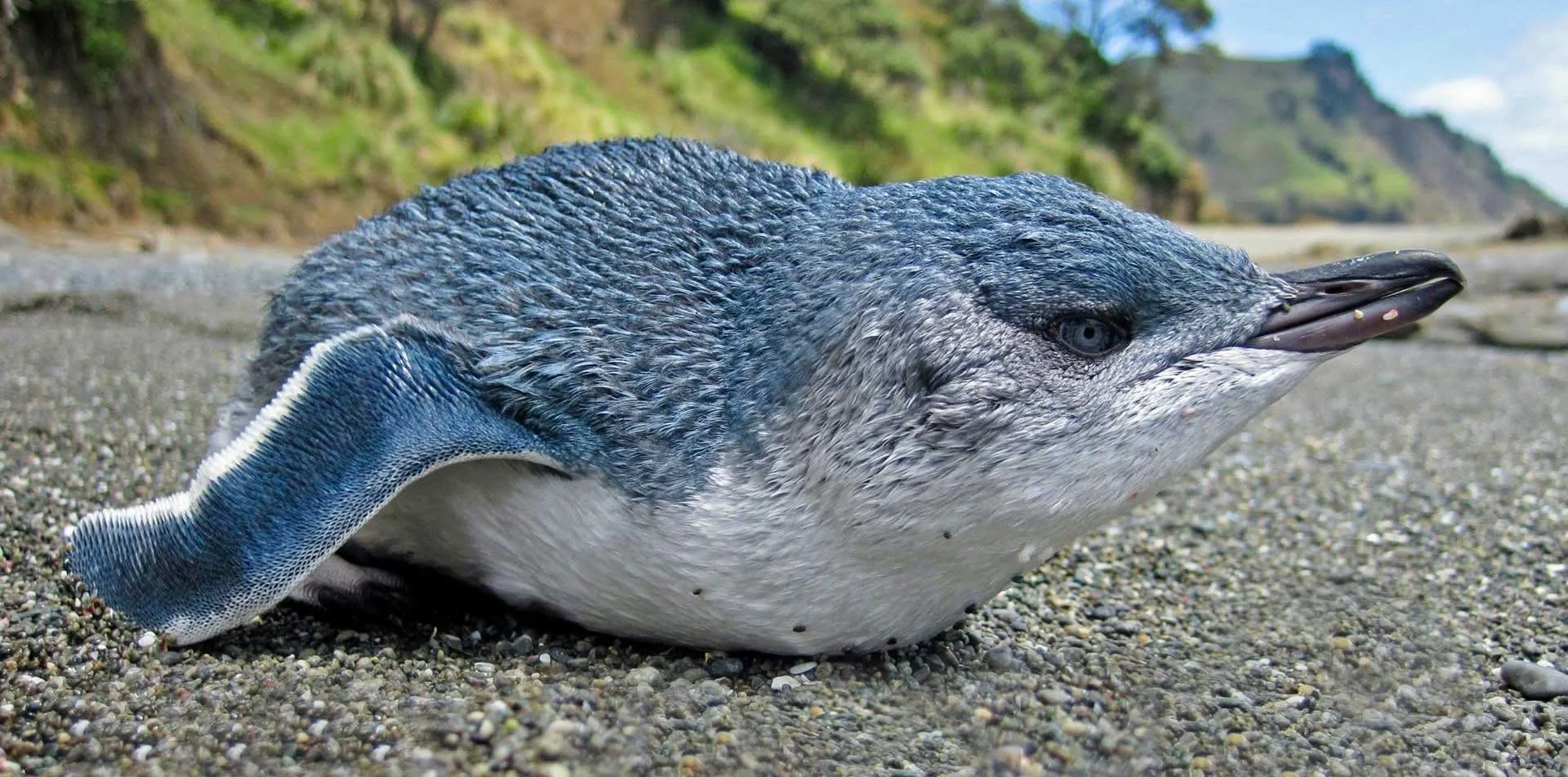
A little blue penguin or kororā, sitting on a beach along the coastline.
At dusk, a lesser known population of marine locals begin arriving home to their burrows along the coast, after a long day of fishing, to feed their families.
Kororā (little blue penguins) live along the shoreline between Cape Rodney and Ti Point. In recent years environmental changes have contributed to mass mortality events for this taōnga species. So a motivated group of volunteers are monitoring the wellbeing of the local penguin population to better understand the stressors that are impacting their ability to thrive.
Karen Baird is a trustee for the Seabird Trust and volunteers with the Leigh Penguin Project in her spare time. The project’s main goal is to build a clearer picture of how well the population is doing from year to year. Because Kororā are mostly active on land in the evening, the group uses equipment such as trail cameras, alongside volunteer monitoring, to track their breeding progress through the season.
“At the moment we've got quite a lot [of trail cameras] out for the penguins. We just put some more out just recently as well, after we had a conservation-trained dog come by and identify more burrows,” Karen explains.
Although there are quite a few community made nesting boxes along the coastline (originally put out when the Penguin Project launched in 2018), many breeding pairs will also choose a natural burrow in a discrete location to set up their nest. Recently a visit from conservation dog ‘Miro’ and her handler Jo Sim helped to discover fifteen extra nesting sites. Karen and the group were then able to install more trail cameras to track penguin activity.
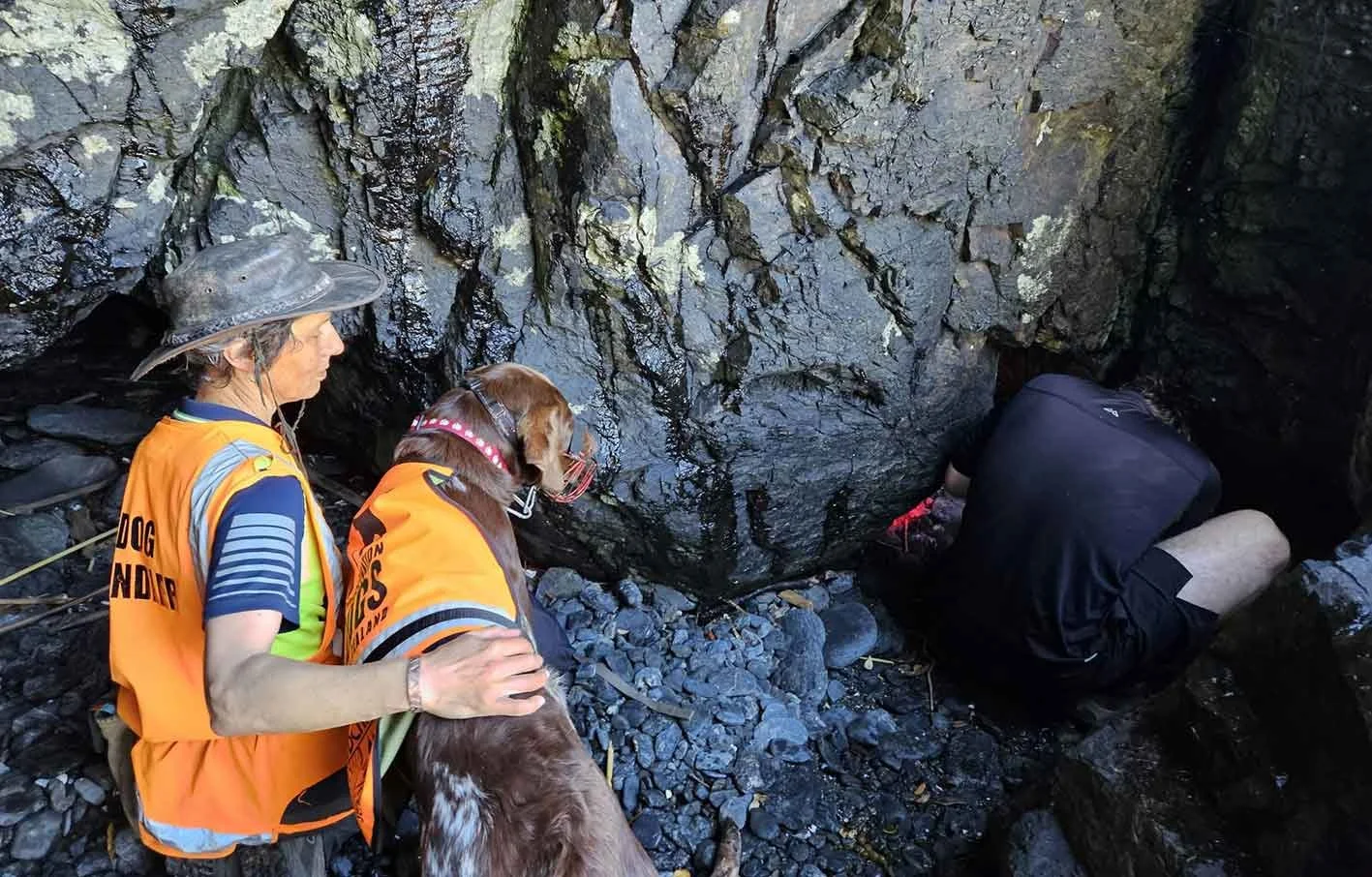
Conservation dog ‘Miro’ and Jo Sim (her handler) watch as a volunteer checks a natural kororā burrow they located.
Monitoring nests and chicks
“When the penguins breed in a nest box, it's easier because you can look in it and see how many penguins there are, and whether they've got eggs. We try not to do it too often but we’re checking because having a penguin population in this area overlaps a lot with humans and their domestic animals, which can be a problem. And then, of course, there's other predators like rats, cats and stoats. What we want to understand is how the penguins are doing, so the trail cams monitor the penguins when they are leaving or arriving back at the nest.”
In the first few weeks after they hatch Kororā chicks can’t be left alone because they need the body warmth and protection of a parent. The mortality rates can be high, and it's not easy to understand what went wrong.
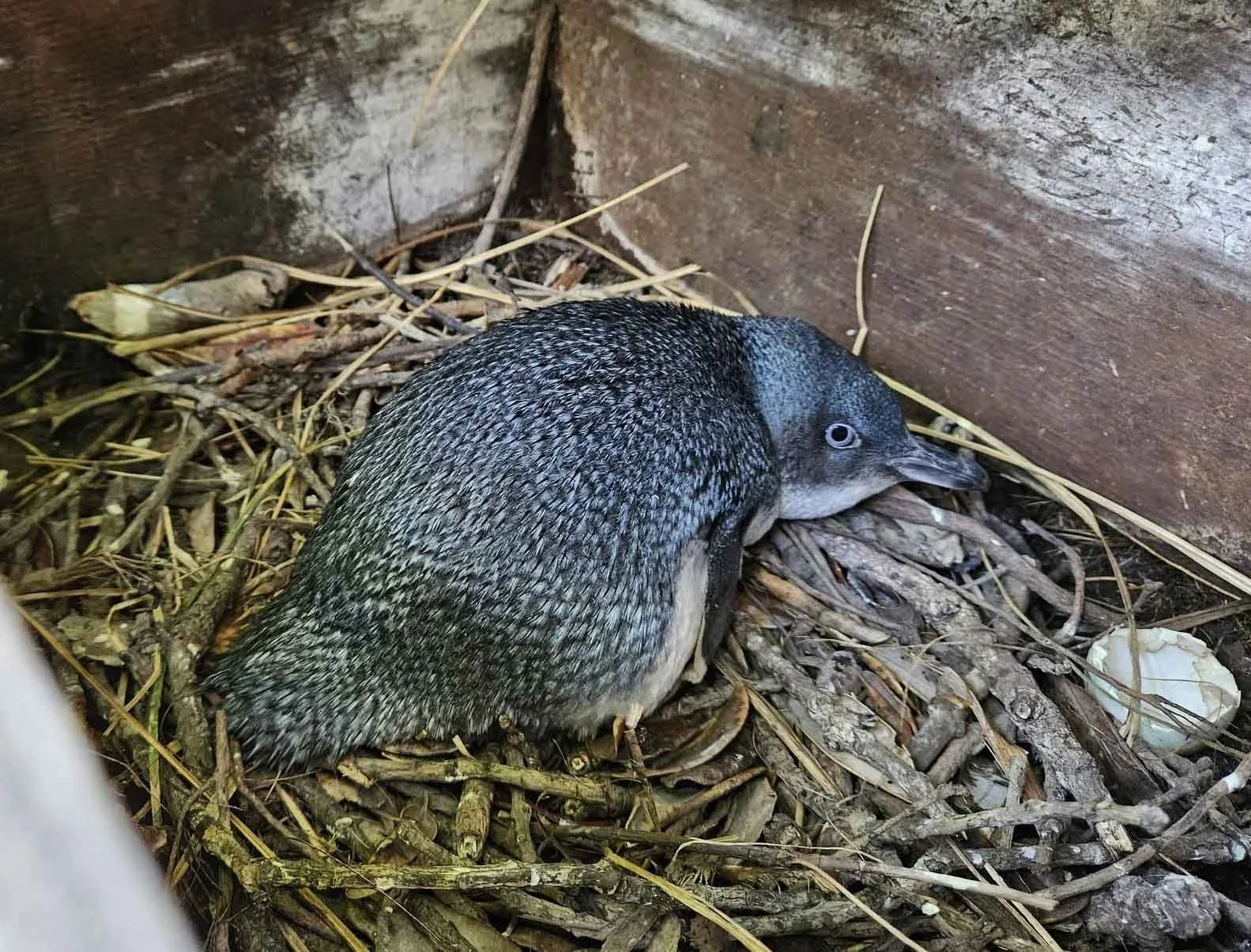
An adult penguin in a nesting box.
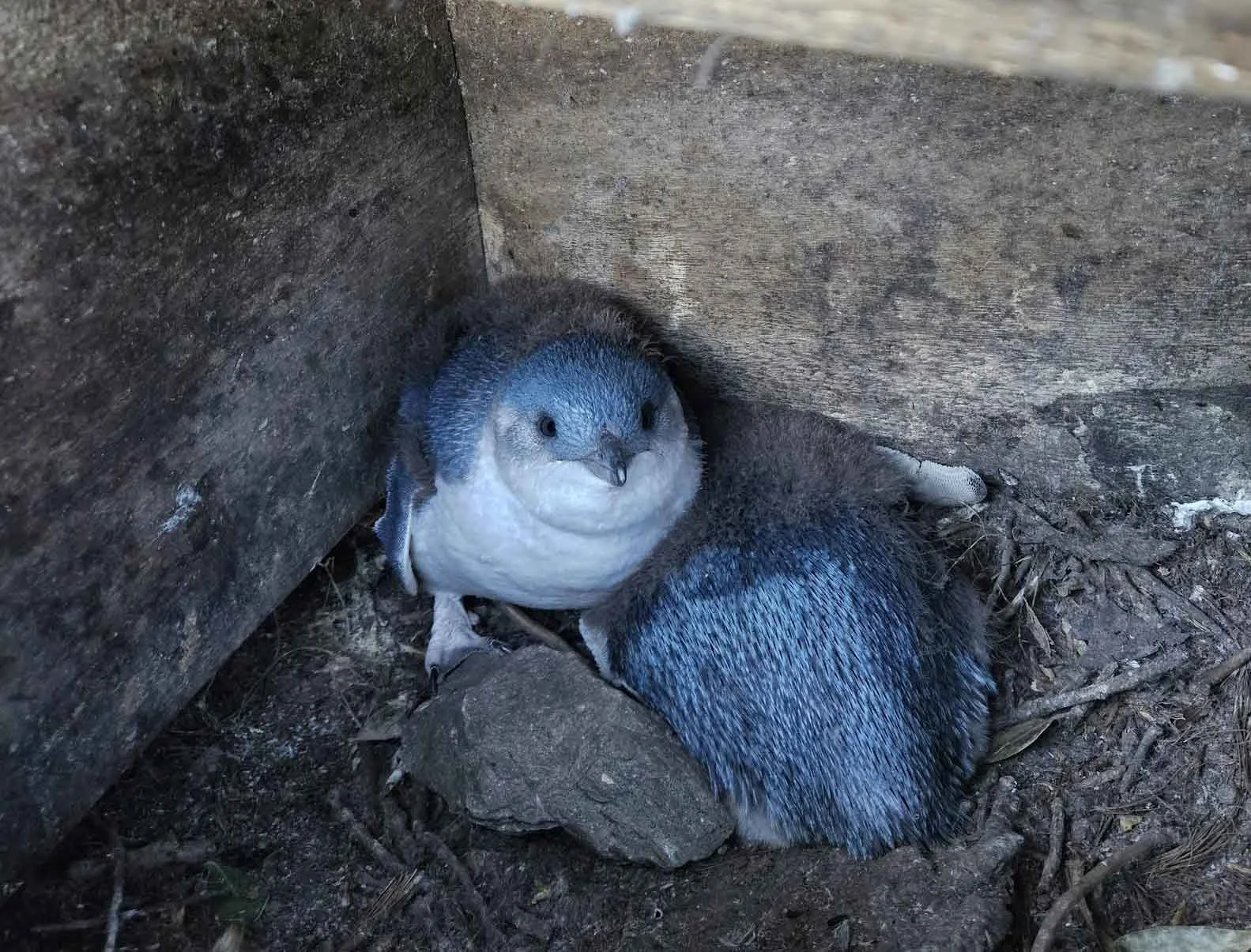
Two fledgling kororā keeping each other warm in the nest.
“It's tough, when the chicks don’t survive and we don't really know why. We can surmise that perhaps the other parent didn’t come back from hunting, and there was no food for them so they starved.”
At times, monitoring penguin chicks is not easy. But the best way to track the success of the Kororā breeding season is to monitor the number of fledglings (juvenile birds) that leave the nest. There are many challenges that influence the survival of young penguins in their first year including parental care, predation, learning to find food, and the added stressors of sedimentation and ocean warming which can limit how and when penguins can hunt.
Tracking the wellbeing of the local Kororā population and its fledglings relies on volunteers being able to locate breeding pairs, and the nesting boxes help with that process.
“It's taken a few years for the birds to get interested. There’s only two [boxes] that we know have had chicks in them this year. But we also don’t know what decisions the penguins make about whether they’re going to breed or not, and where. Do they skip a year and not bother to breed and is that a normal part of their cycle?”
“Many challenges influence the survival of fledgling penguins in their first year.”
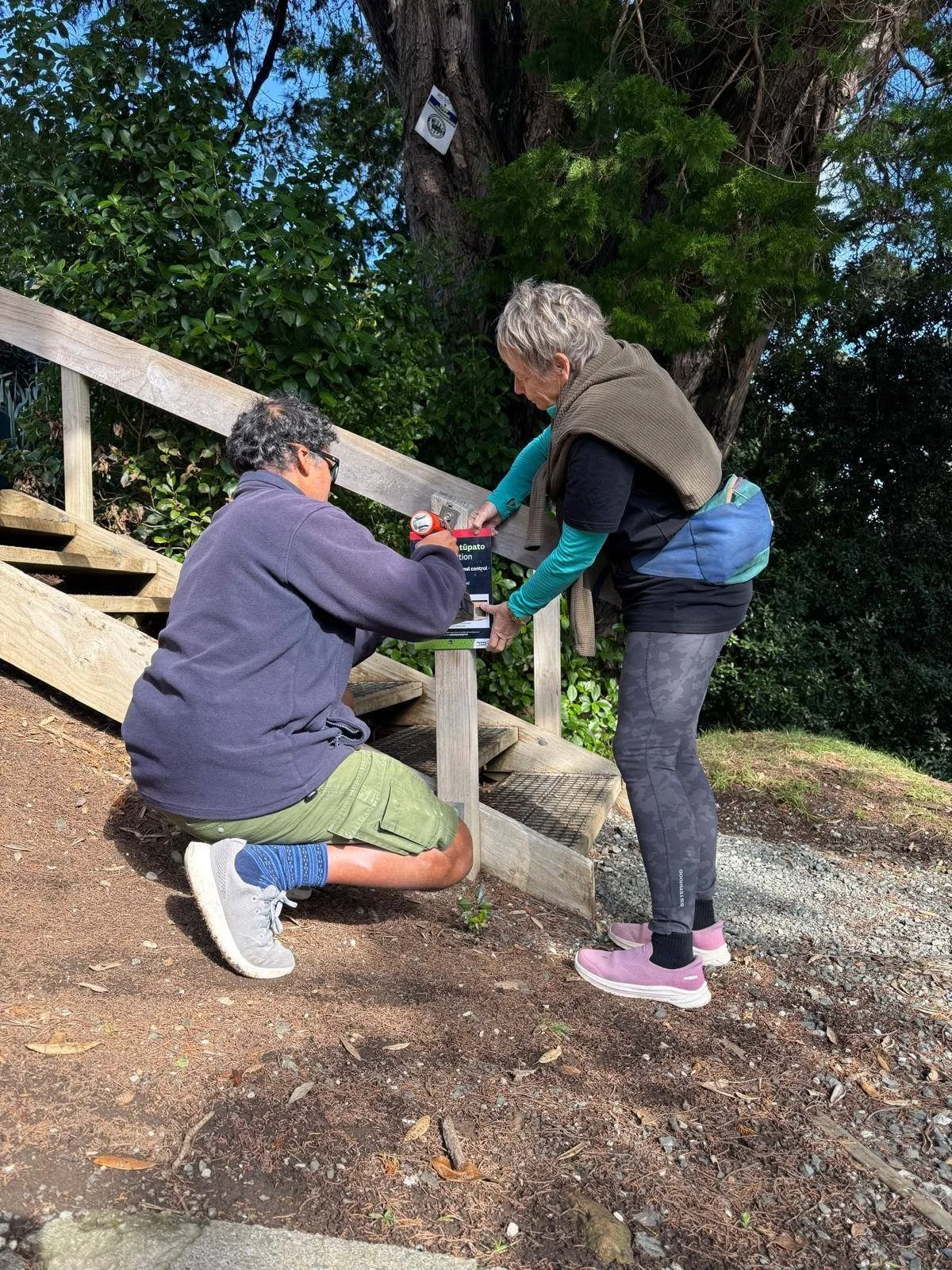
Karen and Dan Marrow (local parks ranger) install dog control signage to inform local people about critical breeding areas.
Exploring new monitoring pathways
With so many increasing challenges for local Kororā, it's difficult to figure out how well the population is really doing. So the Penguin Project team is now looking at more long-term monitoring methods, including tracking how many fledglings return to their birthplace, which is another indication of breeding success. Recently Karen was trained to carry out a micro-chipping process for young and adult birds. This approach will build vital information as to whether the fledglings survive to adulthood and return home to begin raising their own families.
“We're going to be putting microchips in adults and young birds that are nearly ready to fledge that we can access. This means in the future we can use the microchip reader to see if the same bird is sitting on the eggs, or whether the other parent has successfully returned and swapped over. We’ve had two microchipped chicks that have already fledged this season. We also weigh and measure the birds when we chip them, so we know these birds were in good condition when they left.”
Building a protection network
Kororā breeding season takes place between July to December each year, and the Penguin Project relies heavily on volunteer hours to monitor the nest sites throughout this time. The New Zealand Penguin Initiative has recently set up an app to help groups like the Leigh Penguin Project to add their data to a nation-wide database for Kororā, while also tracking their own local population. This vital information-sharing from volunteer groups will help to create a clearer picture of the secret life of Kororā around the country and the challenges they face. And with ongoing pest trapping and increased care taken around nesting sites from local residents when adult penguins moult (between December to March), this special population of resident Kororā will continue to make the Ōmaha coastline their home.
About the Author
Karen has a lengthy background in conservation, working for the NZ Wildlife Service, Department of Conservation, Forest & Bird and BirdLife International. She is currently employed as the Threatened and Migratory Species Advisor for the Secretariat for the Pacific Regional Environment Programme (SPREP).